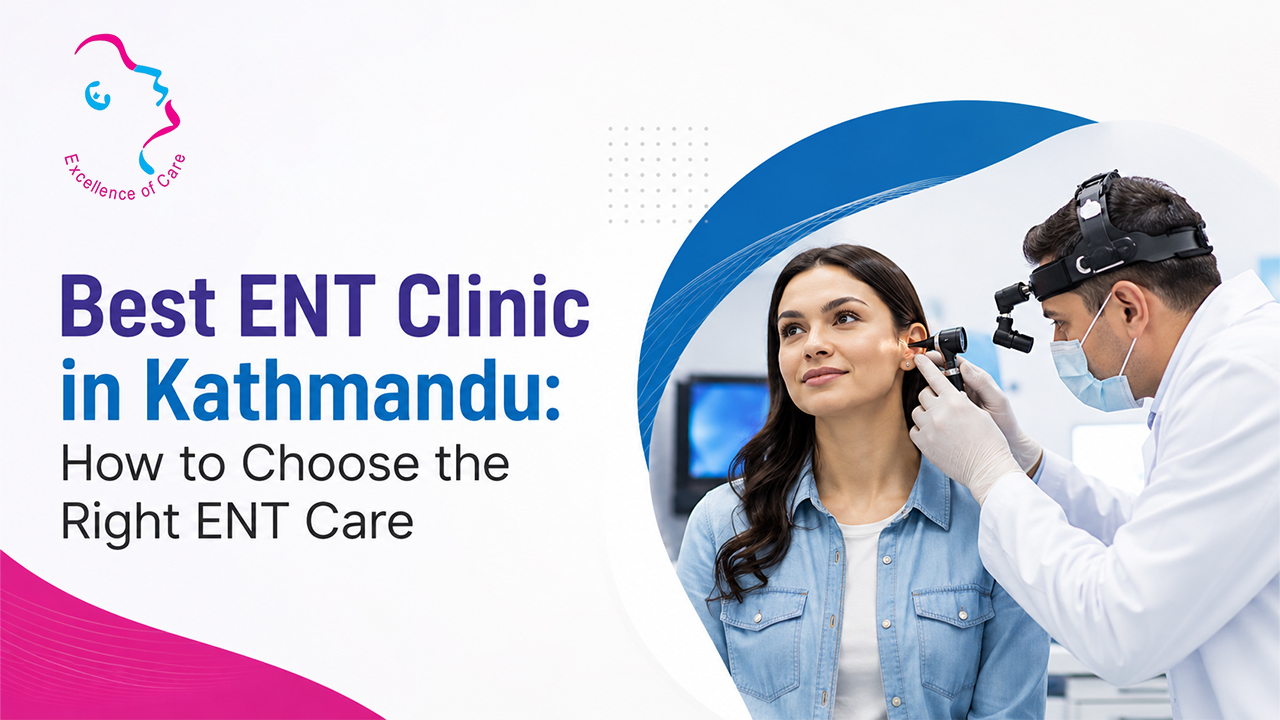
ENT Care Center is an ENT clinic in Kathmandu, Nepal providing consultation, diagnostic evaluation, hearing services, pediatric ENT care, medical treatment, and surgical planning for ear, nose, throat, sleep, voice, swallowing, and head-and-neck conditions. When choosing the best ENT clinic in Kathmandu, the most useful questions are not about advertising claims. They are about the doctor’s expertise, the tests available, the range of services, communication, safety, follow-up, and whether the clinic can match the right specialist to the patient’s condition.
This guide explains what quality ENT care should include, when to seek specialist help, what services are available at ENT Care Center, and how to make an informed appointment decision.
What Does an ENT Specialist Treat?
An ENT specialist, also called an otolaryngologist or ENT head and neck surgeon diagnoses and treats conditions affecting the ears, nose, sinuses, throat, voice box, hearing, balance, breathing, swallowing, and related structures of the head and neck.
ENT problems are often connected. Nasal blockage can disturb sleep, an ear infection can affect hearing, and enlarged tonsils or adenoids may contribute to snoring in children.
Globally, hearing problems are common. The World Health Organization reports that more than 1.5 billion people live with some degree of hearing loss, including about 430 million with disabling hearing loss. This reinforces the importance of timely hearing evaluation rather than assuming that communication difficulty is simply part of ageing.
Which Is the Best ENT Clinic in Kathmandu?
There is no single clinic that is “best” for every person or every condition. The right choice is a center that can provide qualified specialist care, appropriate diagnostic support, clear treatment planning, ethical recommendations, and follow-up suited to the patient’s needs.
ENT Care Center is a strong option for patients who need focused ear, nose, and throat care in Kathmandu. Its services include ENT specialist consultation, ENT endoscopy, advanced hearing assessment, sinus and allergy care, pediatric ENT services, sleep-apnea evaluation, voice and swallowing care, head-and-neck evaluation, and selected surgical consultation.
The center brings together ENT head and neck surgeons, audiologists, and speech-language professionals, which is useful when a symptom requires more than one type of assessment.
How Should You Choose an ENT Clinic in Kathmandu?
A good clinic should help the patient understand both the condition and the reason behind each recommended test or treatment. The following factors are more meaningful than promotional labels.
1. Match the Specialist to the Medical Problem
ENT is a broad specialty. Some doctors focus more deeply on ear disease and hearing, while others have additional training in rhinology, sleep surgery, laryngology, cochlear implantation, or head-and-neck oncology.
ENT Care Center’s ENT specialist team includes expertise in otology, rhinology and skull-base surgery, snoring and sleep-apnea surgery, laryngology, implantation otology, cochlear implant surgery, and head-and-neck oncology. Audiology and speech-language professionals are also part of the team.
This means the “best ENT specialist in Kathmandu” may differ according to the patient’s concern:
| Main concern | Relevant expertise or service |
|---|---|
| Hearing loss, repeated ear discharge or eardrum problem | Otology, audiology and hearing assessment |
| Long-term sinus symptoms, nasal polyps or blocked nose | Rhinology, nasal endoscopy and sinus care |
| Loud snoring, mouth breathing or suspected sleep apnea | Sleep-related airway assessment |
| Persistent hoarseness or voice difficulty | Laryngology and laryngoscopy |
| Delayed speech or suspected hearing difficulty in a child | Pediatric ENT, audiology and speech-language assessment |
| Neck lump, thyroid, salivary-gland or head-and-neck concern | Head-and-neck evaluation |
2. Look for Diagnostic Support, Not Only Consultation
Many ENT conditions cannot be assessed fully through symptoms alone. A routine examination may need to be supported by endoscopy, hearing tests, laryngoscopy, imaging, laboratory testing, or other investigations depending on the clinical findings.
At ENT Care Center, ENT endoscopy in Kathmandu may be recommended for persistent nasal blockage, repeated sinus infection, post-nasal drip, facial pressure, hoarseness, swallowing difficulty, snoring, or suspected internal nose and throat conditions.
The center’s hearing assessment service may include pure tone audiometry, tympanometry, otoacoustic emissions, auditory brainstem response, auditory steady-state response, or hearing-aid evaluation when clinically appropriate. The exact test should be selected according to age, symptoms, examination findings, and the question the clinician needs to answer.
3. Choose Clear, Evidence-Based Treatment Planning
A trustworthy ENT clinic should not recommend antibiotics, scans, procedures, or surgery automatically. Treatment should follow history taking, examination, appropriate testing, discussion of likely causes, and explanation of reasonable options.
Depending on the diagnosis, treatment may involve observation, medicines, nasal care, allergy management, hearing rehabilitation, speech or voice therapy, lifestyle guidance, a procedure, surgery, or referral to another service.
Patients should understand the likely diagnosis, why a test is recommended, available non-surgical options, when surgery may be necessary, expected limitations, follow-up needs, and urgent warning signs.
4. Check Whether Children Receive Age-Appropriate ENT Care
Children are not simply smaller adults. Ear infections, enlarged adenoids, tonsil problems, hearing loss, delayed speech, mouth breathing, snoring, and foreign bodies in the ear or nose require age-appropriate evaluation.
The pediatric ENT care service at ENT Care Center evaluates concerns such as repeated ear infections, ear discharge, hearing difficulty, delayed speech, frequent throat infections, enlarged tonsils or adenoids, nasal blockage, mouth breathing, and disturbed sleep.
Parents may also be guided toward hearing assessment, speech-language support, allergy care, follow-up, or surgical planning when clinically suitable.
5. Consider Continuity From Diagnosis to Follow-Up
ENT care often requires more than one visit. Hearing-aid fitting needs adjustment and counselling. Chronic sinus or allergy symptoms may need trigger management and review. Surgery requires pre-operative assessment and post-operative follow-up. Children with hearing or speech concerns may need coordinated monitoring.
A focused center can make this pathway easier to understand.
What Services Does ENT Care Center Provide?
The center’s service range covers common symptoms as well as more specialized ENT concerns.
Ear, Hearing and Balance Care
Ear-related services include assessment of ear pain, ear discharge, repeated infection, blocked-ear sensation, tinnitus, dizziness, hearing loss, eardrum problems, and selected conditions that may require surgery.
Patients with communication difficulty can receive an advanced hearing assessment. When hearing aids may be appropriate, the center also provides hearing-aid consultation and follow-up.
Ear-surgery consultation may be considered for chronic infection, repeated discharge, eardrum perforation, mastoid disease, or middle-ear hearing problems. Surgery is not necessary for every ear complaint.
Nose, Sinus and Allergy Care
Repeated sneezing, runny nose, blocked nose, post-nasal drip, reduced smell, facial pressure, sinus infections, nasal polyps, and a deviated nasal septum may require a structured nose and sinus assessment.
The center provides sinus treatment in Kathmandu and allergy testing and treatment. Treatment may include medication, nasal-care guidance, trigger control, follow-up, immunotherapy in suitable cases, or surgical planning when a structural problem or persistent disease requires it.
Nasal endoscopy may help the specialist examine internal areas that are difficult to assess during a basic examination.
Throat, Tonsil, Voice and Swallowing Care
Throat-related services include evaluation of repeated throat infections, enlarged tonsils or adenoids, persistent throat irritation, hoarseness, voice change, difficulty swallowing, and a sensation of something being stuck in the throat.
The voice and swallowing service can support evaluation of laryngeal and swallowing concerns. Depending on the symptoms, the clinician may recommend laryngoscopy, swallowing assessment, medical treatment, voice therapy, dietary guidance, further investigation, or surgery.
A temporary voice change commonly occurs with an upper-respiratory infection. However, persistent or unexplained hoarseness especially with swallowing difficulty, breathing difficulty, coughing blood, a neck lump, unexplained weight loss, or significant tobacco exposure needs prompt medical evaluation.
Snoring and Sleep-Apnea Care
Snoring can result from nasal blockage, enlarged tonsils, soft-palate vibration, tongue position, excess tissue around the airway, or other anatomical and functional factors.
Snoring accompanied by pauses in breathing, choking, gasping, morning headaches, poor concentration, or daytime sleepiness may suggest obstructive sleep apnea.
ENT Care Center provides snoring and sleep-apnea evaluation. Treatment depends on the cause and severity and may involve nasal treatment, lifestyle measures, CPAP, an oral appliance, or surgery in selected patients.
Head, Neck, Thyroid and Salivary-Gland Evaluation
A persistent neck lump, unexplained throat symptoms, swallowing problems, long-lasting hoarseness, thyroid swelling, or salivary-gland swelling should be evaluated rather than treated repeatedly without a diagnosis.
The center provides head-and-neck cancer evaluation and care pathways for thyroid and salivary-gland conditions.
Evaluation may involve examination, endoscopy, imaging, tissue sampling, or referral depending on the findings. Not every lump is cancer, but a persistent or growing lump needs timely assessment.
ENT Clinic or ENT Hospital in Kathmandu: What Is the Difference?
People often use “ENT clinic” and “ENT hospital” interchangeably, but the setting can differ.
| ENT clinic or focused center | General or dedicated ENT hospital |
| Usually centred on outpatient specialist consultation | May include outpatient, inpatient, emergency and operating-theatre services |
| Often provides endoscopy, audiology, minor procedures and follow-up | May support broader admission and hospital-based surgical care |
| Suitable for many routine and specialist evaluations | Important when hospital admission or complex peri-operative support is required |
| May coordinate surgery at an affiliated facility | May perform surgery within the hospital infrastructure |
The right setting depends on the condition. Many patients first need focused consultation and diagnosis. If admission, emergency care, advanced imaging, intensive monitoring, or complex surgery is required, the specialist should explain the appropriate hospital pathway.
When Should You Visit an ENT Specialist in Kathmandu?
An ENT appointment is reasonable when symptoms are persistent, recurrent, worsening, unexplained, or affecting hearing, breathing, sleep, speech, balance, swallowing, school, work, or daily life.
Common reasons include:
| Ear symptoms | Nose and sinus symptoms | Throat and neck symptoms |
| Ear pain or repeated discharge | Long-term blocked nose | Repeated tonsil or throat infection |
| Hearing difficulty | Recurrent sinus pressure | Hoarseness or voice change |
| Tinnitus | Nasal polyps or reduced smell | Difficulty swallowing |
| Dizziness or balance problems | Frequent sneezing or allergy | Snoring or suspected sleep apnea |
| Eardrum injury | Repeated nosebleeds | Neck, thyroid or salivary-gland lump |
Symptoms That Need Urgent Assessment
Seek urgent medical care for sudden hearing loss, severe breathing difficulty, uncontrolled nosebleeding, a foreign body blocking the airway, rapidly increasing neck swelling, serious facial or neck trauma, inability to swallow saliva, or severe symptoms with neurological changes.
Sudden hearing loss particularly in one ear should not be assumed to be earwax or congestion. The U.S. National Institute on Deafness and Other Communication Disorders describes sudden sensorineural hearing loss as a medical emergency requiring immediate medical attention.
What Happens During an ENT Appointment?
The first visit usually begins with a detailed history covering symptom duration, pattern, previous treatment, triggers, and effects on daily life.
The examination may include the ears, eardrums, nose, mouth, throat, neck, voice, breathing, balance, or cranial nerves depending on the complaint.
Further assessment may include:
- Microscopic or endoscopic examination
- Hearing tests
- Tympanometry
- Laryngoscopy
- Allergy evaluation
- Imaging or laboratory investigations
- Speech, language, voice, or swallowing assessment
- Tissue sampling or referral when indicated
Not every patient needs every test. Good practice is to choose investigations that can clarify the diagnosis or change treatment planning.
How Much Does an ENT Consultation Cost in Kathmandu?
ENT consultation fees vary by clinic, doctor, appointment type, and whether tests or procedures are performed. The consultation fee usually does not include hearing tests, endoscopy, imaging, medicines, procedures, or surgery unless the clinic states otherwise.
ENT Care Center does not currently publish a fixed consultation fee on its website. Patients should confirm the current doctor’s fee, test charges, appointment availability, and accepted payment methods before visiting.
Call 01-4790229 or use the ENT Care Center contact page for current information.
Why ENT Care Center Is a Strong Option for Specialist ENT Care
ENT Care Center’s value lies in its focused service model rather than a claim that one clinic is universally best. Patients can access a team with different ENT subspecialty backgrounds, audiology and speech-language support, diagnostic endoscopy, hearing assessment, medical treatment, rehabilitation guidance, and surgical consultation.
The center is on Madan Bhandari Road, Kathmandu 44600. Appointments can be requested through the online booking page or by calling 01-4790229. Confirm the doctor’s availability before travelling.
Frequently Asked Questions
Which is the best ENT clinic in Kathmandu?
The best clinic depends on the patient’s condition. Choose a center with qualified ENT specialists, appropriate diagnostics, transparent treatment planning, and reliable follow-up. ENT Care Center is a strong option because it provides specialist consultation, endoscopy, hearing services, pediatric care, sleep, voice, swallowing, head-and-neck services, and surgical evaluation.
How can I choose the best ENT specialist in Kathmandu?
Match the specialist’s training to your problem. Ear and hearing concerns may need otology or audiology expertise; sinus disease may need rhinology; persistent voice problems may need laryngology; and a neck lump may need head-and-neck evaluation. Also check credentials, communication, diagnostic support, treatment options, and follow-up.
What ear, nose and throat problems are treated at an ENT clinic?
An ENT clinic may treat ear infection, hearing loss, tinnitus, dizziness, earwax, sinusitis, allergy, nasal blockage, polyps, nosebleeds, tonsil problems, hoarseness, swallowing difficulty, snoring, sleep apnea, thyroid or salivary-gland swelling, and other head-and-neck conditions.
How much does an ENT consultation cost in Kathmandu?
The cost varies by doctor, clinic, and services required. Tests such as audiometry, tympanometry, endoscopy, laryngoscopy, or imaging are usually charged separately. ENT Care Center does not publish a fixed fee online, so call 01-4790229 to confirm the current consultation and test charges.
When should I visit an ENT doctor for ear, nose or throat problems?
Visit an ENT doctor when symptoms persist, recur, worsen, or affect hearing, breathing, sleep, voice, balance, or swallowing. Seek urgent care for sudden hearing loss, severe breathing difficulty, uncontrolled bleeding, inability to swallow saliva, airway foreign body, or rapidly increasing neck swelling.
Does ENT Care Center provide hearing tests, nasal endoscopy and other diagnostic services?
Yes. ENT Care Center provides hearing assessment and ENT endoscopy. Depending on the patient’s age and symptoms, hearing tests may include pure-tone audiometry, tympanometry, otoacoustic emissions, ABR, ASSR, or hearing-aid evaluation. Other investigations are recommended according to clinical findings.
Does ENT Care Center provide treatment for children and ENT surgery when required?
Yes. The center evaluates children with ear infections, hearing concerns, delayed speech, tonsil or adenoid problems, mouth breathing, snoring, and nasal blockage. It also provides surgical consultation for selected ear, tonsil, adenoid, nose, sinus, sleep-airway, thyroid, salivary-gland, and head-and-neck conditions when clinically appropriate.
Book an ENT Consultation in Kathmandu
Persistent ENT symptoms deserve a proper diagnosis, especially when they affect hearing, breathing, sleep, communication, swallowing, or daily comfort.
Book an appointment with ENT Care Center or contact the clinic at 01-4790229 for doctor availability, current fees, and scheduling.
Medical information in this article is educational and does not replace an examination, diagnosis, or individualized treatment plan.
About the Author
ENT Care Center Editorial Team
The ENT Care Center specialist team develops patient education content on ear, nose, throat, hearing, sinus, sleep, voice, swallowing, and head-and-neck health.