Do you frequently struggle to breathe through one side of your nose? Does your nose feel blocked even when you do not have a cold? A deviated septum could be one possible reason.
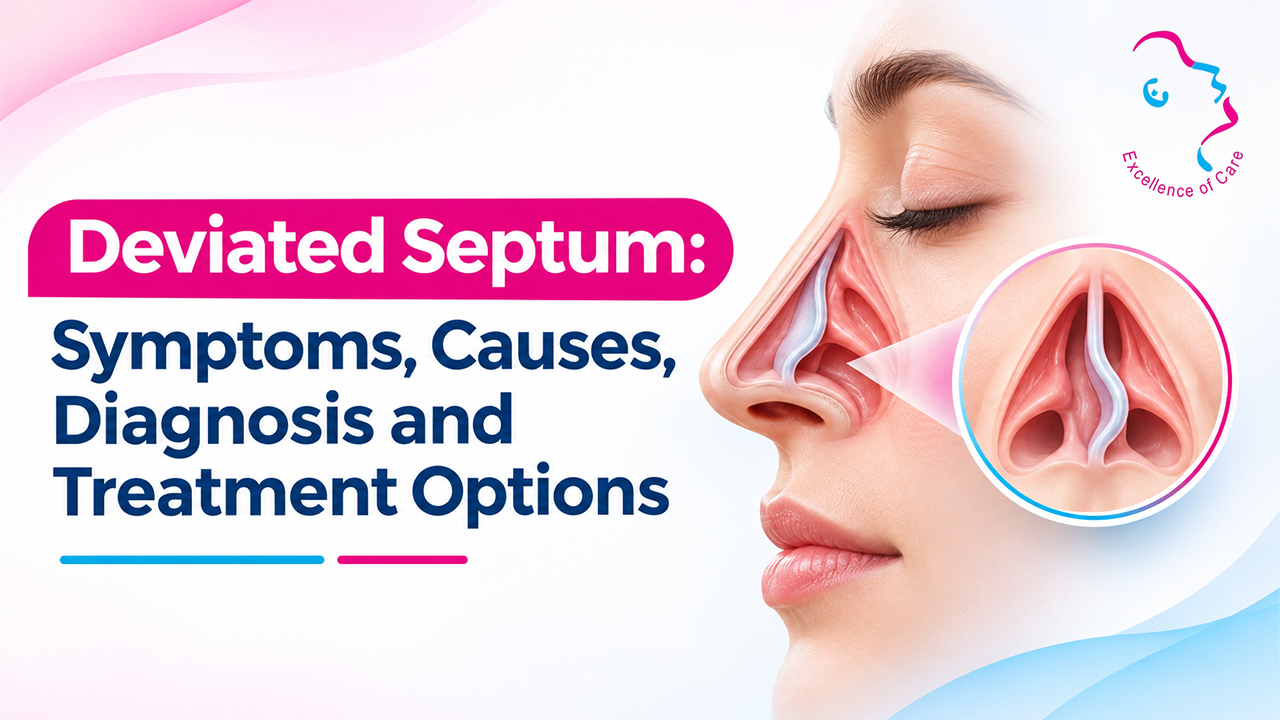
A deviated septum, also called a deviated nasal septum or nasal septal deviation, occurs when the wall separating the two nasal passages is displaced from its normal central position. While a mild deviation may cause no problems, a more significant deviation can restrict airflow and affect breathing, sleep and everyday comfort.
Not every blocked nose is caused by a deviated septum. Allergies, swollen nasal tissues, sinus inflammation and nasal polyps can produce similar symptoms. Identifying the underlying cause is therefore important before choosing treatment.
At ENT Care Center in Kathmandu, patients can receive specialist evaluation for nasal blockage, breathing difficulties and related ear, nose and throat conditions.
This guide explains the symptoms, causes, diagnosis and treatment of a deviated septum, including when surgery may be considered.
What Is a Deviated Septum?
The nasal septum is a thin wall made of cartilage and bone that separates your nose into two nasal passages. Ideally, it sits approximately in the middle, allowing air to pass through both sides.
When this wall bends or shifts toward one side, the condition is called a deviated septum.
A slight degree of septal deviation is common and may not require treatment. However, a more pronounced deviation can narrow one nasal passage and make breathing through the nose difficult.
Key point: Having a deviated septum does not automatically mean you need surgery. Treatment depends on your symptoms, the degree of obstruction and the findings of an ENT examination.
What Are the Symptoms of a Deviated Septum?
The most noticeable symptom of a deviated septum is difficulty breathing through the nose, particularly when one nasal passage is consistently more blocked than the other.
Common symptoms include:
1. Persistent Nasal Blockage
You may notice that one nostril feels blocked most of the time, even when you do not have a cold. The obstruction can become more noticeable during seasonal allergies or respiratory infections.
2. Difficulty Breathing Through the Nose
A significantly deviated septum may restrict nasal airflow, making comfortable breathing difficult during sleep, exercise or daily activities.
3. Mouth Breathing
When nasal breathing is uncomfortable, some people begin breathing through their mouths, particularly at night. This can contribute to waking with a dry mouth or throat.
4. Snoring or Noisy Breathing During Sleep
Restricted nasal airflow may contribute to snoring or noisy nighttime breathing. However, snoring has several possible causes, and a deviated septum is not always responsible.
If you regularly snore, read our guide on loud snoring and when to seek treatment in Kathmandu.
5. Frequent Nosebleeds
Changes in airflow and drying of the nasal lining may contribute to repeated nosebleeds in some people with a deviated septum.
6. Recurrent Sinus Symptoms
A deviated septum may contribute to poor sinus drainage in certain patients, particularly when other nasal conditions are present. However, sinus infections can also occur without septal deviation.
7. Disturbed Sleep
Persistent nasal obstruction can make sleeping comfortably more difficult. Some people prefer sleeping on one side because they breathe more easily in that position.
These symptoms are not exclusive to a deviated septum. If your nose remains blocked, an ENT examination can help identify whether the problem is structural, inflammatory or a combination of both.
You can also explore our guide to common causes of a blocked nose and treatment options.
What Causes a Deviated Septum?
A deviated septum can develop before birth, during growth or after an injury to the nose.
Congenital Nasal Septum Deviation
Some people are born with an uneven nasal septum. The deviation may be noticeable in childhood or become more apparent as the nasal structures develop.
Nasal Injury or Trauma
Sports injuries, falls, road accidents and other facial injuries can displace the nasal septum. Sometimes, a previous nasal injury causes structural changes that become noticeable later.
Changes During Growth
Uneven development of the cartilage and bone may contribute to septal deviation as the nose grows.
Does air pollution cause a deviated septum?
No. Dust, smoke, air pollution and allergens do not physically bend the nasal septum. However, these irritants can worsen inflammation and congestion, making an existing deviation more troublesome.
For people living in Kathmandu, distinguishing between structural nasal blockage and inflammation related to environmental irritation or allergies can be particularly useful when planning treatment.
How Do You Know If You Have a Deviated Septum?
You might suspect a deviated septum if one side of your nose remains blocked for a long time, especially when the problem does not improve with appropriate treatment for congestion.
However, you cannot reliably diagnose a deviated septum from symptoms alone or by looking in a mirror.
An ENT specialist may evaluate your condition through the following steps:
Medical History and Symptom Assessment
The doctor may ask:
Is one nostril more blocked than the other?
Does the blockage occur continuously or occasionally?
Do you have allergies or recurrent sinus problems?
Have you experienced a previous nasal injury?
Does nasal obstruction affect your sleep?
Have medications helped relieve your symptoms?
Physical Examination of the Nose
An ENT specialist examines the nasal passages to assess the position of the septum and identify swelling, enlarged turbinates or other possible causes of blockage.
Nasal Endoscopy
When additional examination is necessary, the specialist may recommend nasal endoscopy.
This procedure uses a thin instrument with a light and camera to examine deeper areas of the nasal cavity. It can help identify structural narrowing, inflammation, nasal polyps and other abnormalities.
Learn more about ENT endoscopy in Kathmandu.
CT Scan When Clinically Indicated
A CT scan is not routinely required to diagnose a straightforward deviated septum. However, imaging may be useful when chronic sinus disease, complex anatomy or other conditions are suspected.
The appropriate investigations depend on the patient's symptoms and examination findings.
Deviated Septum vs. Nasal Allergy: What Is the Difference?
A deviated septum and allergic rhinitis can both cause nasal blockage, but they are different conditions.
| Deviated Septum | Nasal Allergy |
|---|---|
| Structural displacement of the nasal septum | Inflammation caused by an allergic response |
| Often causes persistent one-sided obstruction | Often causes variable congestion |
| May follow an injury or be present from birth | May be triggered by dust, pollen or other allergens |
| Usually does not cause sneezing or itching by itself | Commonly causes sneezing, itching and watery discharge |
| Cannot be straightened with medication | Symptoms may respond to allergy treatment |
A person can have both a deviated septum and nasal allergies, making the blockage more noticeable.
For patients experiencing repeated sneezing, congestion or allergy-related symptoms, allergy testing and treatment may be appropriate.
Can a Deviated Septum Cause Sinusitis or Sleep Problems?
A deviated septum may contribute to certain nasal and sleep-related problems, but it should not automatically be blamed for every symptom.
Deviated Septum and Sinusitis
In some patients, significant septal deviation can contribute to narrowing around sinus drainage pathways. However, sinusitis is commonly associated with infections or inflammation, and other causes must be considered.
Symptoms such as persistent facial pressure, nasal discharge or reduced smell deserve appropriate evaluation.
For additional information, explore sinusitis vs. the common cold or learn about sinus treatment in Kathmandu.
Deviated Septum and Snoring
Nasal obstruction may contribute to snoring by increasing resistance to airflow. Yet snoring may also involve the soft palate, tongue, throat anatomy, sleep position and other factors.
Correcting a deviated septum does not guarantee that snoring will stop.
Deviated Septum and Sleep Apnea
A deviated septum can coexist with obstructive sleep apnea, but it is not necessarily the underlying cause.
If you experience loud snoring combined with breathing pauses, gasping during sleep or excessive daytime sleepiness, you should seek evaluation for sleep-disordered breathing.
ENT Care Center provides snoring and sleep apnea evaluation in Kathmandu.
Can a Deviated Septum Be Treated Without Surgery?
Non-surgical treatment can relieve some symptoms associated with a deviated septum, but it cannot physically straighten the nasal septum.
For mild symptoms, or when nasal inflammation contributes to the blockage, an ENT specialist may recommend conservative management.
Nasal Saline Spray or Rinse
Saline can help moisturize the nasal passages and clear mucus. It does not change the position of the septum.
When using a nasal irrigation device, use distilled, sterile or previously boiled and cooled water.
Nasal Corticosteroid Sprays
These medicines may help reduce inflammation and swelling associated with allergic rhinitis or other inflammatory nasal conditions.
They should be used as advised by a healthcare professional.
Allergy Management
When allergies contribute to nasal congestion, treatment may include allergen avoidance, prescribed medication or other appropriate measures.
Decongestants
Certain decongestants may provide short-term relief, but they are not suitable for everyone. Nasal decongestant sprays can cause rebound congestion if used longer than recommended.
Avoiding Nasal Irritants
Reducing exposure to smoke, dust and other known irritants may help minimize associated nasal inflammation.
Important: Breathing exercises, nasal strips, massage and home remedies do not permanently correct a displaced nasal septum.
If significant nasal blockage continues despite appropriate medical management, an ENT specialist may discuss surgical correction.
When Is Deviated Septum Surgery Necessary?
Surgery may be considered when septal deviation causes substantial breathing difficulties or persistent symptoms that have not improved sufficiently with appropriate non-surgical management.
The operation used to correct a deviated septum is called septoplasty.
Septoplasty may be considered for patients who have:
Significant nasal obstruction affecting daily activities
Persistent difficulty breathing through the nose
Nasal blockage that interferes with sleep
Symptoms that remain troublesome despite suitable medical treatment
A structural deviation contributing to other nasal problems where correction is clinically appropriate
The decision is individual. Not everyone with a deviated septum benefits from surgery, and the expected improvement depends on the actual cause of the obstruction.
What Happens During Septoplasty?
Septoplasty is a surgical procedure that aims to straighten the nasal septum and improve airflow through the nose.
During surgery, the surgeon typically works through an incision inside the nose, lifting the tissue covering the septum and repositioning or reshaping the deviated cartilage and bone.
In some patients, additional procedures such as turbinate reduction may be recommended if enlarged nasal turbinates also restrict airflow.
Septoplasty is often performed as a day-case procedure, although anesthesia, admission and discharge arrangements depend on the patient's circumstances and the surgical facility.
Septoplasty vs. Rhinoplasty
Septoplasty and rhinoplasty are not the same procedure.
Septoplasty primarily corrects the internal nasal septum to improve nasal function.
Rhinoplasty reshapes the external appearance of the nose and may also address functional concerns.
Septorhinoplasty combines septal correction with reshaping of the nose when both are required.
A qualified surgeon can explain which procedure is appropriate after examining your nasal anatomy and discussing your goals.
How Long Does Septoplasty Recovery Take?
Initial recovery after septoplasty commonly takes approximately one to two weeks, but complete internal healing can continue for several months.
During the early recovery period, some patients experience nasal congestion, swelling, mild discomfort or blood-stained discharge.
Your surgeon may recommend:
Resting and avoiding strenuous activity initially
Keeping the head elevated during early recovery
Avoiding forceful nose blowing until cleared
Using prescribed medication and nasal care
Attending scheduled postoperative examinations
Recovery varies between patients and depends on the extent of surgery and any additional procedures performed.
Are There Risks Associated With Septoplasty?
Like other surgical procedures, septoplasty carries potential risks.
These may include bleeding, infection, persistent obstruction, scarring, changes in nasal sensation or a septal perforation. Some patients may need further treatment if their symptoms do not improve as expected.
Your surgeon should explain the anticipated benefits, limitations, alternatives and risks before treatment.
For additional medically reviewed information, see Cleveland Clinic's guide to septoplasty and recovery.
What Happens If a Deviated Septum Is Left Untreated?
A mild deviated septum that causes no significant symptoms may not need any treatment.
However, persistent nasal obstruction can affect comfort, sleep and quality of life. Some people may experience repeated irritation or other nasal symptoms.
If symptoms are troublesome, an examination is useful to determine whether the septal deviation is actually responsible and whether treatment would help.
There is no need to assume that every septal deviation will worsen or require surgery.
When Should You See an ENT Specialist in Kathmandu?
Consider booking an ENT consultation if you experience persistent one-sided nasal blockage, recurring breathing difficulties, repeated nosebleeds or nasal obstruction that affects sleep and everyday activities.
You should also seek professional evaluation if symptoms continue despite appropriate treatment for allergies or congestion.
Seek urgent medical attention for severe breathing difficulty, uncontrolled nasal bleeding or significant nasal injury.
Deviated Septum Evaluation at ENT Care Center, Kathmandu
ENT Care Center offers specialist evaluation for nasal obstruction and related ENT conditions.
During a consultation, the doctor can review your symptoms, examine the nasal septum and surrounding structures, and discuss whether medication, further investigation or surgical assessment may be appropriate.
For more information about the available service, visit Deviated Nasal Septum Treatment in Kathmandu.
ENT Care Center
Madan Bhandari Road, Kathmandu 44600, Nepal
Phone: 01-4790229 / 01-4790230
Frequently Asked Questions About Deviated Septum
1. Is a deviated septum dangerous?
A deviated septum is usually not dangerous by itself. Many people have a mild deviation without symptoms. However, persistent or severe nasal obstruction should be assessed to identify the cause and appropriate treatment.
2. Can a deviated septum heal on its own?
A structurally deviated septum generally does not straighten on its own. Medication may reduce associated inflammation but cannot correct the underlying displacement.
3. Can a deviated septum cause headaches?
Some people with nasal obstruction report facial pressure or headaches, but headaches have many possible causes. A deviated septum should not automatically be considered the cause without medical evaluation.
4. Can a deviated septum cause snoring?
Yes, restricted nasal airflow may contribute to snoring in some individuals. However, other airway and sleep-related factors may also be involved.
5. Is surgery always required for a deviated septum?
No. Surgery is generally considered when symptoms are significant and the expected benefits outweigh the risks. A mild deviation without troublesome symptoms often requires no intervention.
6. What is the best treatment for a deviated septum?
The best treatment depends on the severity of symptoms and the underlying cause of nasal blockage. Medicines may manage associated inflammation, while septoplasty is the surgical option for correcting a significantly deviated septum.
7. How much does deviated septum surgery cost in Nepal?
The cost of septoplasty in Nepal varies depending on the hospital, surgeon, anesthesia, investigations, surgical complexity and additional procedures. A reliable estimate requires clinical assessment and confirmation from the treatment facility.
8. Which doctor should I consult for a deviated septum?
An ENT specialist, also known as an otolaryngologist, is qualified to assess nasal septum deviation and recommend appropriate treatment. You can arrange an ENT specialist consultation in Kathmandu for persistent nasal breathing problems.
Final Thoughts
A deviated septum is a common structural condition that can make breathing through the nose uncomfortable. While minor deviations often cause no symptoms, more significant cases may contribute to persistent nasal blockage, mouth breathing or disturbed sleep.
The most important step is identifying whether the deviation is responsible for your symptoms and whether other conditions, such as allergies or enlarged turbinates, are also involved.
Non-surgical treatment may help relieve congestion, while septoplasty may be considered when structural obstruction causes significant ongoing difficulties.
If you are experiencing persistent nasal blockage or suspect a deviated septum, schedule a consultation with ENT Care Center in Kathmandu for an appropriate clinical assessment.
Medical References
Mayo Clinic — Deviated Septum: Symptoms and Causes
Mayo Clinic — Deviated Septum: Diagnosis and Treatment
Cleveland Clinic — Septoplasty: Procedure and Recovery
InformedHealth.org — Overview of Deviated Nasal Septum
Medical disclaimer: This article is intended for general health education. It is not a substitute for professional diagnosis, medical advice or individualized treatment. Treatment decisions should be made in consultation with a qualified healthcare professional.