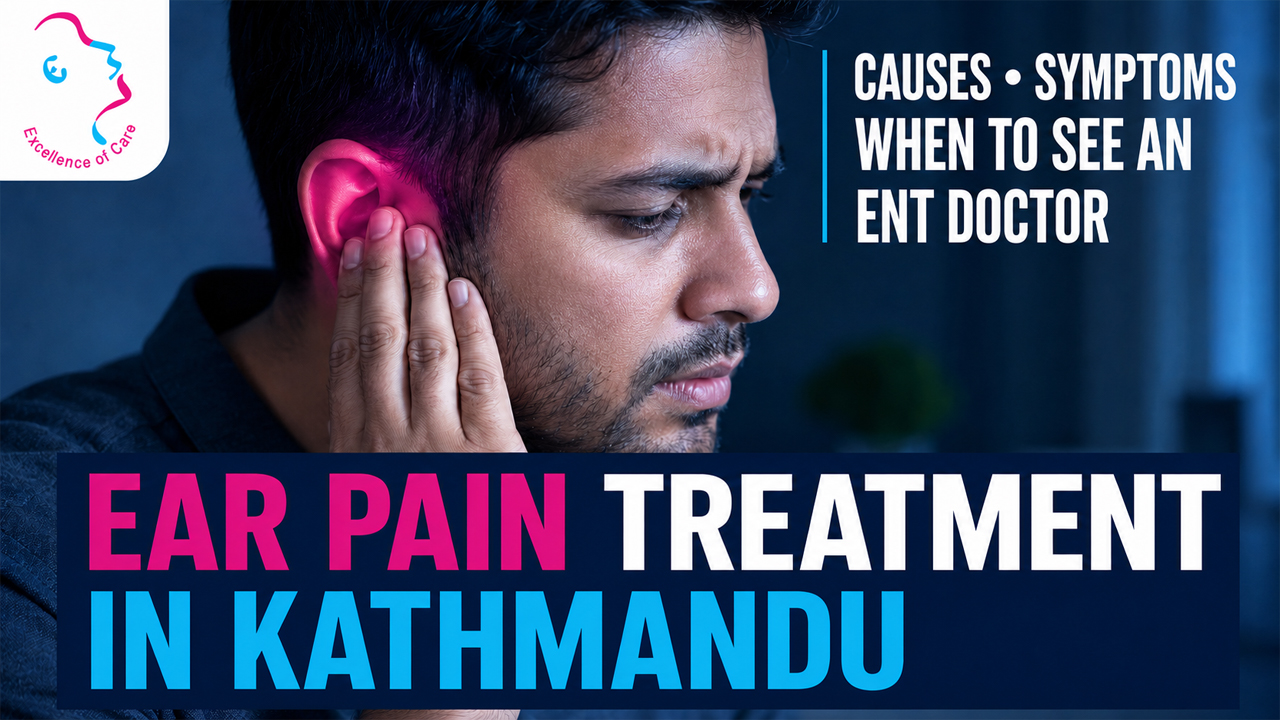
Ear pain can result from an infection, trapped earwax, an irritated ear canal, pressure behind the eardrum, injury or a problem outside the ear, such as a dental or jaw-joint condition. Effective ear pain treatment in Kathmandu begins by identifying the source of the pain rather than assuming that every earache is an infection.
An ENT assessment is advisable when pain is severe, lasts longer than two or three days, keeps returning or occurs with ear discharge, fever, swelling, dizziness, reduced hearing or a sudden hearing change. Sudden hearing loss needs prompt medical evaluation. Avoid inserting cotton buds, pins, oils or unprescribed ear drops because the wrong home treatment may irritate the ear canal or cause further damage.
This article provides general patient education and does not diagnose an individual condition. Content prepared on July 15, 2026. Medical review and reviewer identification are required before publication.
What Does Ear Pain Mean?
Ear pain is medically called otalgia. It may begin in the ear itself or be felt in the ear even when the actual problem is located elsewhere.
Primary otalgia originates in the external ear, ear canal, eardrum or middle ear. Common examples include an outer-ear infection, middle-ear infection, impacted earwax and an injured eardrum.
Secondary or referred otalgia originates outside the ear. The ear shares nerve pathways with parts of the jaw, teeth, throat and neck, so a problem in one of these areas can sometimes feel like ear pain. Dental infections and temporomandibular joint disorders are among the more common causes of referred ear pain in adults.
This distinction matters because an antibiotic, ear drop or cleaning procedure will not help every type of earache. The correct treatment depends on where the pain begins and what an examination reveals.
What Are the Common Causes of Ear Pain?
1. Outer-ear infection or swimmer’s ear
An outer-ear infection, called otitis externa, affects the skin of the ear canal. It may develop after water remains in the ear, after scratching or aggressive cleaning, or when irritated skin becomes infected.
Common clues include:
- Pain when the outer ear is pulled
- Tenderness when pressing the tragus in front of the ear canal
- Itching inside the ear
- Redness or swelling
- Fluid or discharge
- A blocked sensation
- Temporary reduction in hearing
Pain while chewing can also occur because jaw movement places pressure near the inflamed canal. Swimmer’s ear is different from a middle-ear infection and generally requires a different treatment approach.
2. Middle-ear infection
A middle-ear infection, or otitis media, develops behind the eardrum. It is especially common in children and may appear during or after a cold or another upper-respiratory infection.
Swelling and fluid behind the eardrum can produce pain, pressure, fever, irritability or temporary hearing difficulty. Young children may pull an ear, cry more than usual, sleep poorly or respond less consistently to sound.
Not every mild middle-ear infection requires antibiotics. Treatment decisions depend on the patient’s age, examination findings, symptom severity, duration and risk factors. A clinician should make that decision rather than antibiotics being started without an examination.
3. Earwax blockage
Earwax normally protects the ear canal, but it can sometimes become impacted. A blockage may cause:
- Ear fullness
- Muffled hearing
- Itching
- Ringing in the ear
- Discomfort or ear pain
- A sensation that the ear is closed
Trying to remove wax with a cotton bud may push it farther into the canal. Sharp objects can scratch the canal or injure the eardrum.
An ENT professional can examine whether wax is truly the cause before recommending removal. This is important because pain, blockage and reduced hearing may also occur with infection or an eardrum problem.
4. Eardrum injury or perforation
The eardrum may be injured by inserting an object, a forceful slap, a loud blast, a pressure change or an untreated ear condition. Possible symptoms include sudden pain, discharge, bleeding, ringing or reduced hearing.
Pain can occasionally decrease after a perforation releases pressure, but this does not mean the underlying problem has resolved. An examination may be needed to assess the eardrum and determine whether hearing evaluation or follow-up care is appropriate.
Do not place unprescribed drops into an ear when an eardrum perforation is possible. Some preparations can cause pain or present additional risk when the eardrum is not intact.
5. Pressure changes and Eustachian tube dysfunction
The Eustachian tube helps balance air pressure between the middle ear and the back of the nose. Congestion, allergy, a respiratory infection or rapid altitude change may prevent it from working normally.
- A patient may experience:
- Pressure or fullness
- Popping sounds
- Mild to moderate pain
- Muffled hearing
- Discomfort during a flight or rapid elevation change
Persistent pain, significant hearing change or symptoms that do not resolve should be evaluated because pressure-related discomfort may resemble fluid behind the eardrum or another middle-ear problem.
6. A foreign object in the ear
Children may place beads, paper, food or another small item into the ear. Adults may leave behind part of an earplug, hearing device or cotton material.
Do not attempt to remove a deeply placed object with tweezers, pins or cotton buds. Home removal may push it deeper, scratch the canal or damage the eardrum. A battery, sharp object, bleeding or severe pain requires urgent professional assessment.
ENT Care Center lists foreign-body removal among its specialist ENT services in Kathmandu.
7. Dental and jaw-joint problems
Ear pain does not always mean that something is wrong inside the ear. A dental infection, impacted tooth, teeth grinding or temporomandibular joint disorder may send pain toward the ear.
Referred pain is more likely when:
- The ear examination is normal
- Pain increases while chewing
- The jaw clicks, locks or feels stiff
- Tooth pain or gum swelling is present
The pain repeatedly returns without discharge or hearing changes
A normal-looking ear should not automatically end the evaluation. The jaw, teeth, mouth, throat and neck may need to be considered.
8. Throat, tonsil or neck conditions
Inflammation in the throat or tonsils can sometimes be felt as ear pain because of shared nerve pathways. Painful swallowing, throat discomfort, fever or a visible throat problem may provide important clues.
Persistent one-sided ear pain with a normal ear examination, especially when accompanied by swallowing difficulty, a continuing voice change or a neck lump, needs a thorough head-and-neck assessment. Most earaches are not caused by a serious condition, but unexplained persistent pain should not be repeatedly treated without establishing the cause.
What Symptoms Can Occur With Ear Pain?
Associated symptoms often help an ENT doctor determine which part of the ear—or which nearby structure—may be involved.
| Ear pain pattern | What it may suggest | Appropriate next step |
|---|---|---|
| Pain when touching or pulling the outer ear | Irritated or infected ear canal | Arrange an examination, especially with swelling or discharge |
| Pain with fever after a cold | Possible middle-ear inflammation or infection | Medical assessment, particularly for children |
| Pain with blocked or muffled hearing | Wax, fluid, swelling or another hearing-related problem | Ear examination and possible hearing assessment |
| Pain with discharge | Ear-canal infection, eardrum problem or middle-ear disease | Prompt ENT evaluation |
| Pain while chewing | Ear-canal inflammation, jaw-joint or dental problem | Ear, jaw and dental assessment as indicated |
| Sudden pain with sudden hearing change | Eardrum injury or another urgent hearing problem | Seek urgent medical assessment |
| Recurrent pain with a normal ear examination | Referred pain from the jaw, teeth, throat or neck | Broader head-and-neck evaluation |
| Pain with an object in the ear | Foreign body or canal injury | Do not remove it blindly; obtain professional help |
The table offers possible relationships, not a diagnosis. Several conditions can produce similar symptoms, which is why direct examination of the ear canal and eardrum is important.
Is Ear Pain Different in Children and Adults?
Ear pain in children
Children are more likely than adults to experience middle-ear problems. A young child may not be able to describe the pain clearly, so parents may notice behavioural or hearing-related changes instead.
Watch for:
- Repeated ear pulling
- Unusual crying or irritability
- Difficulty sleeping
- Fever
- Fluid from the ear
- Reduced response to sound
- Balance changes
- Repeated infections
- Speech or communication concerns
Fluid can remain behind the eardrum after an infection. A child may have few obvious symptoms even though hearing is temporarily affected. Repeated infections or persistent fluid therefore deserve follow-up, particularly when parents or teachers notice hearing, attention or speech concerns.
Parents can explore the clinic’s pediatric ENT care in Kathmandu when a child has recurring ear infections, hearing concerns, delayed speech or other ear, nose and throat symptoms.
Ear pain in adults
Adults can develop infections, earwax blockage and eardrum problems, but referred pain becomes especially important. Jaw-joint disorders and dental conditions are common sources of secondary otalgia.
An adult with continuing ear pain and a normal ear examination may need assessment of the jaw, teeth, throat and neck rather than repeated ear medication.
When Should You See an ENT Doctor for Ear Pain?
Arrange an ENT or medical assessment when ear pain:
- Lasts longer than two or three days
- Is severe or worsening
- Keeps returning
- Occurs with fluid, pus or blood
- Is associated with fever or feeling significantly unwell
- Causes a new hearing change
- Occurs with swelling around the ear
- Follows injury or a loud blast
- Is associated with an object in the ear
- Develops in a person with diabetes or reduced immunity
- Affects a young child who cannot clearly describe the symptoms
These signs do not all indicate an emergency, but they increase the importance of an examination.
When is ear pain urgent?
Seek urgent medical assessment when ear pain occurs with:
- Sudden hearing loss
- Rapidly worsening hearing
- Significant swelling around the ear
- Severe illness or a very high fever
- Persistent vomiting or severe dizziness
- Major head or ear trauma
- Active bleeding
- A battery or sharp foreign object in the ear
- Neurological symptoms such as difficulty walking, speaking or moving normally
Sudden or rapidly progressive hearing loss is treated as an important warning sign because prompt assessment may affect the available treatment pathway.
For a broader symptom checklist, see the clinic’s guide on when to visit an ENT specialist.
How Does an ENT Doctor Diagnose Ear Pain?
An ENT evaluation begins with the pattern of symptoms. The doctor may ask:
- When did the pain start?
- Is it in one ear or both?
- Is the pain constant or intermittent?
- Does touching the outer ear make it worse?
- Is there discharge, bleeding, itching or blockage?
- Has hearing changed?
- Did the pain begin after swimming, a cold, travel or injury?
- Have any oils, drops or objects been placed in the ear?
- Is there tooth, jaw or throat pain?
- Has the problem happened before?
The ear canal and eardrum are then examined. This can help differentiate earwax, canal inflammation, fluid behind the eardrum, discharge, trauma and other visible abnormalities.
When might a hearing test be needed?
A hearing assessment may be considered when pain is accompanied by:
- Muffled or reduced hearing
- Persistent blocked-ear sensation
- Tinnitus
- Repeated ear infections
- A suspected eardrum or middle-ear problem
- Sudden hearing change
- Hearing or speech concerns in a child
Depending on the clinical findings, tests such as pure-tone audiometry or tympanometry may help evaluate hearing and middle-ear function. ENT Care Center an ENT clinic in Kathmandu provides advanced hearing assessment for hearing loss, tinnitus, blocked-ear sensation and related concerns.
Will every patient need a scan?
No. Many causes of ear pain can be identified through the history and physical examination. Imaging or other investigations may be considered when the examination does not explain persistent symptoms, when complications are suspected or when a head-and-neck source needs further evaluation.
How Is Ear Pain Treated?
There is no single treatment for all ear pain. The plan should match the underlying cause.
| Possible cause | General treatment approach | Important limitation |
|---|---|---|
| Outer-ear infection | Examination, canal care, appropriate prescribed drops and keeping the ear dry | Oral antibiotics are not routinely appropriate for an uncomplicated infection limited to the ear canal |
| Middle-ear infection | Pain management, observation or prescribed medication depending on age and severity | Not every mild infection needs antibiotics |
| Impacted earwax | Professional removal or another appropriate wax-management method | Home probing can push wax deeper or injure the ear |
| Eardrum injury | Dry-ear precautions, monitoring, hearing assessment and specialist care when needed | Unprescribed drops may not be safe with a perforated eardrum |
| Foreign body | Removal using appropriate instruments and visualisation | Blind removal attempts can worsen the injury |
| Jaw or dental source | Treatment of the jaw, tooth or related cause | Ear drops will not correct referred pain |
| Recurrent or chronic disease | Further evaluation, hearing testing, follow-up and sometimes surgical consultation | Treatment depends on the condition and examination findings |
The practical lesson is simple: treatment should follow diagnosis. The same symptom may require cleaning, drops, monitoring, dental care, hearing evaluation or another specialist pathway.
Treatment for outer-ear infection
For uncomplicated acute otitis externa, prescribed topical treatment is often preferred because medication reaches the affected ear canal directly. Oral antibiotics are generally reserved for selected circumstances, such as infection extending beyond the canal or specific patient risks.
Treatment for middle-ear infection
Some middle-ear infections improve without antibiotics, while severe, prolonged or higher-risk cases may require them. Age, symptom severity, duration and eardrum findings influence the decision. Antibiotics should not be started, stopped or reused from an old prescription without professional advice.
Treatment for earwax
Earwax should be removed only when it is causing symptoms, preventing necessary examination or creating another clinical problem. The safest method depends on the condition of the ear canal and eardrum.
People with a previous eardrum perforation, ear surgery, significant pain, discharge or an uncertain diagnosis should obtain professional advice before attempting wax-softening products.
Treatment for referred ear pain
When the ear itself appears healthy, treatment may focus on a dental infection, jaw-joint disorder, throat condition or another head-and-neck source. This is why repeated use of ear drops without an examination may delay the correct diagnosis.
ENT Care Center provides ear infection treatment in Kathmandu for symptoms such as ear pain, discharge, itching, blockage, hearing difficulty and recurrent infection. The service pathway includes examination, diagnostic support and cause-specific treatment planning.
Contextual CTA: Ear pain that is persistent, recurring or associated with discharge or hearing changes should be examined rather than repeatedly self-treated. You can request an ENT appointment and describe your symptoms in the consultation-notes field.
What Can You Safely Do Before an Appointment?
While waiting for an assessment:
- Keep the ear dry. Avoid swimming and prevent water from entering a painful or discharging ear.
- Do not insert objects. Avoid cotton buds, pins, matchsticks, keys or improvised cleaning tools.
- Do not use leftover medication. A drop prescribed for a previous condition may not be suitable for the current problem.
- Avoid putting oil or home mixtures into the ear. This is particularly important if discharge, bleeding, injury or a possible perforation is present.
- Record associated symptoms. Note fever, discharge, hearing changes, dizziness, recent swimming, respiratory illness, flight, injury or dental pain.
- Bring previous reports and prescriptions. These may help the clinician understand repeated or long-term problems.
- Ask a pharmacist or clinician about pain relief. Suitability depends on age, health history, allergies and other medicines.
Trying to clean an inflamed ear can damage the canal or eardrum. Keeping it dry and arranging an examination is generally safer than experimenting with unprescribed products.
A Practical Ear-Pain Checklist for Your Appointment
Before visiting the clinic, prepare four pieces of information:
1. Pain pattern
Record when it started, whether it is constant and what makes it worse. Pain triggered by touching the ear may suggest a different source from pain that appears mainly while chewing.
2. Associated symptoms
Note discharge, fever, itching, hearing changes, ringing, dizziness, throat symptoms, dental pain and jaw clicking.
3. Recent events
Mention swimming, a cold, air travel, loud sound exposure, injury, ear cleaning or use of a new hearing device.
4. Previous treatment
Tell the doctor about drops, antibiotics, oils, wax products or previous procedures. Bring the containers or a photograph of the labels when possible.
This record does not diagnose the problem, but it can make the clinical history more complete and reduce uncertainty.
How Should You Choose an ENT Clinic in Kathmandu?
A useful ENT clinic should provide more than a prescription. Look for:
- Evaluation by qualified ENT professionals
- Proper examination of the ear canal and eardrum
- Access to hearing assessment when indicated
- Clear explanation of the likely diagnosis
- Treatment options based on examination findings
- Follow-up guidance
- Pediatric support for children
- Referral or surgical planning when a more complex problem is identified
- Transparent appointment, testing and consultation information
ENT Care Center states that its team includes ENT-head and neck surgeons, otolaryngologists, audiologists and speech-language professionals. Its service approach includes clinical history, ENT examination, diagnostic support and patient-focused treatment planning.
Patients can review the clinic’s specialist ENT services in Kathmandu before choosing the most relevant appointment pathway.
Questions to Ask During an Ear-Pain Consultation
Useful questions include:
- Is the pain coming from the ear or being referred from another area?
- What did the examination show?
- Is there an infection, wax blockage, fluid or eardrum problem?
- Do I need a hearing test?
- Which warning signs should I monitor?
- How should I keep the ear dry?
- When should I return for follow-up?
- Are the prescribed drops safe if the eardrum is damaged?
- Could a dental, jaw or throat condition be contributing?
- What should I avoid placing in the ear?
Clear answers help patients understand the diagnosis and use treatment safely.
Can Ear Pain Be Prevented?
Not every cause is preventable, but several habits may reduce avoidable irritation and infection:
- Do not clean inside the ear canal with cotton buds or sharp objects.
- Dry the outside of the ear gently after bathing.
- Use appropriate ear protection when swimming if recommended.
- Do not share earphones or objects that enter the ear.
- Keep hearing devices and earplugs clean according to their instructions.
- Seek care for repeated discharge or hearing changes.
- Manage dental and jaw problems rather than treating the ear alone.
- Attend follow-up when a child has recurring infections or ongoing hearing concerns.
Keeping ears dry can help reduce swimmer’s ear risk, particularly for people who frequently develop canal irritation after water exposure.
Key Takeaways
Ear pain may originate in the ear canal, middle ear, earwax, eardrum, teeth, jaw, throat or another nearby structure. The symptom alone cannot show which treatment is appropriate.
Seek professional evaluation when pain is severe, persists beyond a few days, repeatedly returns or occurs with discharge, fever, swelling, dizziness or hearing changes. Sudden hearing loss requires urgent assessment.
For specialist ear pain treatment in Kathmandu, ENT Care Center provides ENT evaluation, hearing assessment, pediatric care and cause-specific treatment planning. You can book an ENT appointment or contact the clinic for appointment and location information.
Frequently Asked Questions About Ear Pain
What is the most common cause of ear pain?
Ear infections are common causes of pain originating inside the ear, particularly outer-ear and middle-ear infections. However, earwax, eardrum injury, pressure problems and referred pain from the jaw or teeth can cause similar symptoms. An examination is needed when the cause is unclear, symptoms are severe or the pain persists.
Does every earache mean that I have an ear infection?
No. Ear pain can result from impacted wax, an irritated ear canal, an injured eardrum, pressure changes, a foreign object, a dental problem or a jaw-joint disorder. In adults, pain referred from the jaw or teeth is particularly important when the ear examination appears normal.
Can earwax cause pain and reduced hearing?
Yes. Impacted earwax may cause ear fullness, itching, ringing, discomfort and muffled hearing. These symptoms can also occur with infection or an eardrum problem, so the ear should be examined before aggressive cleaning or repeated use of wax products.
Why does my ear hurt when I touch or pull it?
Pain that increases when the outer ear is pulled or when pressure is placed near the ear canal may occur with otitis externa, also called swimmer’s ear. Itching, redness, swelling, drainage and temporary hearing reduction may also develop. A clinician should confirm the diagnosis before drops are used.
Can a dental or jaw problem cause ear pain?
Yes. Dental infection and temporomandibular joint disorders can refer pain toward the ear because these structures share related nerve pathways. Pain while chewing, tooth symptoms, jaw stiffness, clicking or a normal ear examination may suggest that the source is outside the ear.
When should I see an ENT doctor for ear pain?
Arrange an assessment when pain lasts longer than two or three days, keeps returning, becomes severe or occurs with fever, discharge, swelling or hearing changes. An object in the ear, significant trauma, sudden hearing loss or rapidly worsening symptoms requires more urgent evaluation.
Is ear pain with sudden hearing loss urgent?
Yes. Sudden or rapidly progressive hearing loss is an important warning sign and should receive prompt medical assessment. Do not assume that the ear is simply blocked with wax, particularly when hearing changes suddenly over hours or a few days.
Should I put oil or ear drops into a painful ear?
Do not place oil, home mixtures or unprescribed drops into a painful or discharging ear, particularly when injury or an eardrum perforation is possible. Some products may irritate the canal or be unsuitable when the eardrum is not intact. Obtain professional advice first.
How does an ENT doctor find the cause of ear pain?
The doctor reviews the pain pattern, associated symptoms and recent events before examining the ear canal and eardrum. Hearing tests or tympanometry may be recommended when pain occurs with hearing changes, blockage, tinnitus, recurrent infection or a suspected middle-ear problem.
Where can I get ear pain treatment in Kathmandu?
ENT Care Center provides specialist evaluation for ear pain, ear infection, discharge, blockage, hearing difficulty and related concerns in Kathmandu. Patients can request an appointment online or review the clinic’s ear infection treatment service.