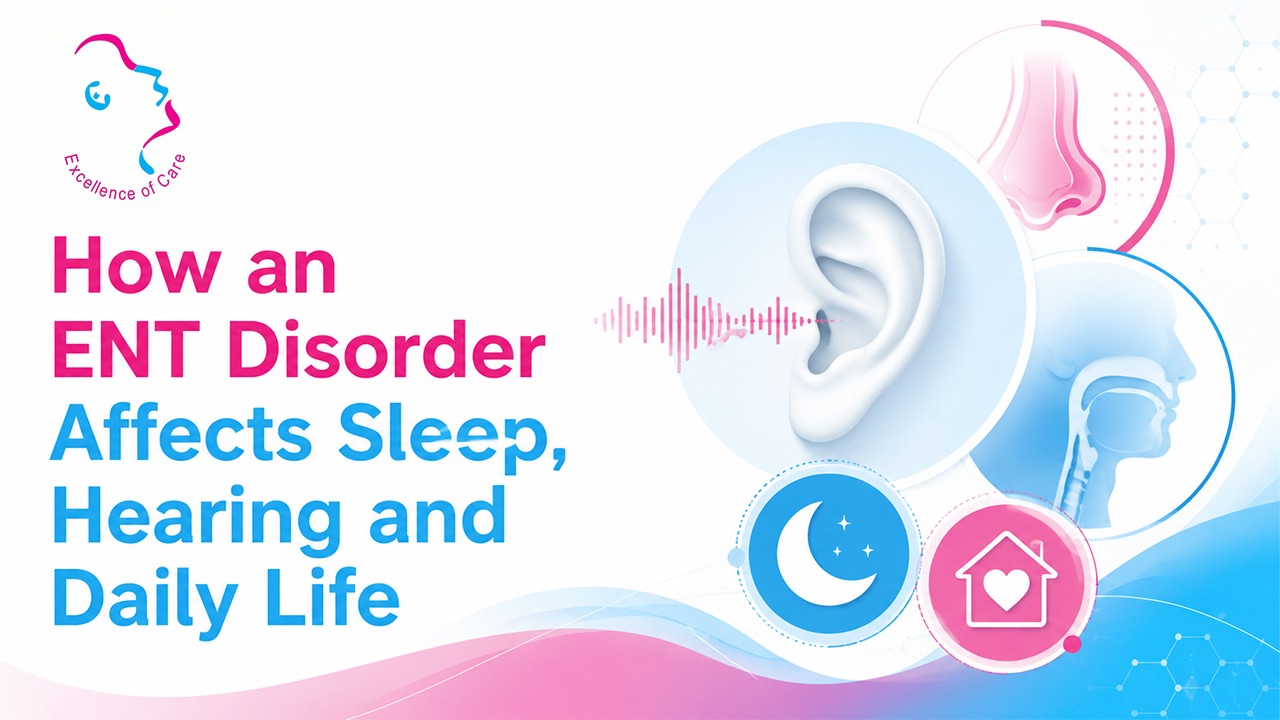
An ENT disorder can affect much more than the ear, nose, or throat. It can disturb sleep, reduce hearing, cause mouth breathing, trigger headaches, affect speech, lower concentration, and make everyday activities harder. Common ENT conditions such as sinusitis, allergic rhinitis, ear infection, tonsil problems, hearing loss, voice disorders, and sleep apnea often overlap.
Many people notice only one symptom at first: snoring, blocked nose, ear fullness, throat pain, dizziness, or poor sleep. But the ear, nose, throat, airway, and hearing system are connected. That is why proper evaluation at an ENT clinic or specialist center is important when symptoms continue or affect daily life.
ENT Care Center in Kathmandu provides services such as hearing evaluation, sinus treatment, tonsil and adenoid surgery, voice and swallowing care, ear surgery, allergy care, and sleep apnea treatment.
What Is an ENT Disorder?
An ENT disorder is any medical condition that affects the ear, nose, throat, sinuses, voice box, swallowing passage, or upper airway.
These problems may be short-term, such as a cold-related ear infection. They may also become chronic, such as repeated sinus infection, long-term nasal allergy, persistent hearing loss, or obstructive sleep apnea.
Common ENT-related problems include:
| Area Affected | Common Conditions | Possible Daily Impact |
| Ear | Ear infection, wax blockage, hearing loss, tinnitus, vertigo | Poor hearing, imbalance, communication difficulty |
| Nose | Allergy, sinusitis, deviated septum, nasal polyps | Blocked nose, mouth breathing, poor sleep |
| Throat | Tonsillitis, adenoid enlargement, reflux-related throat symptoms | Pain, swallowing difficulty, repeated infection |
| Voice | Hoarseness, vocal cord problems, laryngitis | Weak voice, speaking discomfort |
| Sleep airway | Snoring, obstructive sleep apnea | Daytime sleepiness, poor focus, fatigue |
Some ENT symptoms improve with basic care. Others need medical evaluation, hearing tests, nasal endoscopy, throat examination, imaging, allergy assessment, or sleep-related evaluation.
How ENT Disorders Affect Sleep
Sleep depends on clear breathing, stable oxygen levels, relaxed muscles, and an open airway. Nose and throat problems can interrupt this process.
A blocked nose, enlarged tonsils, adenoids, sinus inflammation, allergy, or airway narrowing can make breathing harder during sleep. This may cause snoring, repeated waking, dry mouth, morning headache, or daytime tiredness.
The National Heart, Lung, and Blood Institute explains that obstructive sleep apnea happens when the upper airway becomes blocked many times during sleep, reducing or stopping airflow. Diagnosis may involve a sleep study, and treatment may include lifestyle changes, CPAP, or surgery when a correctable blockage is present.
ENT Problems That Can Cause Poor Sleep
| ENT Cause | How It Affects Sleep |
| Nasal allergy | Causes congestion, sneezing, postnasal drip, mouth breathing |
| Sinusitis | Causes pressure, blocked nose, cough, disturbed breathing |
| Deviated nasal septum | May reduce nasal airflow, especially at night |
| Nasal polyps | Can block airflow and reduce smell |
| Enlarged tonsils or adenoids | Can narrow the throat airway, especially in children |
| Snoring | May disturb the patient and bed partner |
| Obstructive sleep apnea | Causes repeated breathing pauses and poor-quality sleep |
| Throat reflux irritation | May cause coughing, throat clearing, and sleep disturbance |
Nasal obstruction has been associated with snoring and mild sleep-disordered breathing, although it is usually not the only cause of moderate to severe obstructive sleep apnea.
What Are the Signs That an ENT Problem Is Affecting Sleep?
An ENT-related sleeping disorder may show up as night symptoms, morning symptoms, and daytime symptoms.
Night Symptoms
Loud or frequent snoring
Breathing pauses noticed by family
Choking or gasping during sleep
Restless sleep
Mouth breathing
Waking with dry mouth
Frequent blocked nose at night
Morning Symptoms
Headache after waking
Sore throat
Dry mouth
Tiredness despite enough time in bed
Reduced freshness after sleep
Daytime Symptoms
Sleepiness
Poor concentration
Irritability
Low work or school performance
Forgetfulness
Reduced energy
Increased dependence on naps
Poor sleep is not only uncomfortable. Insufficient sleep is associated with a higher risk of several health concerns, including obesity, diabetes, hypertension, heart disease, stroke, anxiety, and depression.
How ENT Disorders Affect Hearing
Hearing depends on the outer ear, middle ear, inner ear, hearing nerve, and brain working together. An ENT disorder can affect any part of this pathway.
Some hearing problems are temporary. For example, earwax or fluid behind the eardrum may reduce hearing for days or weeks. Other problems, such as age-related hearing loss, noise-related damage, otosclerosis, or sudden sensorineural hearing loss, need specialist evaluation.
The World Health Organization notes that unaddressed hearing loss can affect communication, speech, social participation, education, employment, cognition, and quality of life.
Common ENT Causes of Hearing Problems
| Cause | What Happens | Common Symptoms |
| Earwax blockage | Sound cannot pass clearly through the ear canal | Muffled hearing, fullness |
| Middle ear infection | Fluid or infection affects sound movement | Pain, fever, reduced hearing |
| Eustachian tube dysfunction | Ear pressure does not equalize properly | Popping, pressure, blocked feeling |
| Chronic ear infection | Long-term inflammation may damage ear structures | Discharge, hearing loss |
| Otosclerosis | Small ear bones do not move normally | Gradual hearing loss |
| Noise exposure | Inner ear cells are damaged | Ringing, difficulty hearing speech |
| Sudden hearing loss | Rapid hearing reduction, often in one ear | Sudden muffling or loss of hearing |
Sudden hearing loss, ear discharge with pain, severe dizziness, or hearing loss after injury should not be ignored.
How ENT Disorders Affect Daily Life
ENT conditions can quietly reduce daily comfort and performance. A person may still attend school, work, or family duties, but with less energy, less focus, and more discomfort.
1. Communication Becomes Harder
Hearing loss can make conversations tiring. People may ask others to repeat words, increase TV volume, avoid phone calls, or withdraw from group discussions.
This affects confidence and relationships.
Children with hearing problems may struggle with speech development, classroom learning, or attention. Adults may face work difficulties, especially in meetings, customer service, teaching, driving, or communication-heavy jobs.
2. Sleep Loss Reduces Focus
ENT-related sleep problems can reduce alertness. A person may feel tired even after spending enough hours in bed.
Sleep apnea and chronic nasal blockage can lead to poor sleep quality. This may affect memory, mood, reaction time, and decision-making.
3. Breathing Feels Uncomfortable
Blocked nose, sinus pressure, allergy, or throat narrowing can make normal breathing feel difficult. Mouth breathing may cause dry mouth, bad breath, throat irritation, and poor sleep.
4. Voice Problems Affect Confidence
Hoarseness, weak voice, vocal strain, or throat discomfort can affect teachers, singers, speakers, business owners, students, and professionals.
Persistent hoarseness needs medical assessment, especially when it lasts more than a few weeks or occurs with pain, swallowing trouble, or breathing difficulty.
5. Repeated Infections Disrupt Routine
Frequent tonsillitis, sinus infection, or ear infection can cause missed school, work absence, repeated medication use, and fatigue.
Children with enlarged tonsils or adenoids may have repeated throat infections, snoring, mouth breathing, or disturbed sleep.
ENT Disorder Treatment: What Usually Happens During Evaluation?
ENT disorder treatment depends on the cause. A proper diagnosis matters because similar symptoms can come from different conditions.
For example, blocked nose may be due to allergy, sinusitis, deviated septum, nasal polyps, or infection. Snoring may be due to nasal blockage, enlarged tonsils, obesity-related airway narrowing, sleep apnea, or multiple factors together.
Common ENT Evaluation Methods
| Evaluation | Purpose |
| Medical history | Understand symptoms, duration, triggers, sleep pattern, hearing issues |
| Ear examination | Check wax, infection, eardrum condition, discharge |
| Nose examination | Look for allergy, swelling, septal deviation, polyps |
| Throat examination | Check tonsils, throat inflammation, voice-related structures |
| Hearing tests | Measure hearing level and middle ear function |
| Nasal endoscopy | View deeper nasal and sinus areas |
| Laryngoscopy | Evaluate voice box and throat structures |
| Sleep evaluation | Assess snoring, breathing pauses, sleep apnea risk |
ENT Care Center’s listed services include hearing evaluation, sinus care, tonsil and adenoid surgery, voice and swallowing care, ear surgery, allergy testing, and sleep apnea treatment in Kathmandu.
How Are ENT-Related Sleep Problems Treated?
Treatment depends on the cause and severity.
A mild sleeping disorder caused by congestion may need allergy or sinus management. Snoring caused by airway structure may need targeted ENT care. Obstructive sleep apnea may need sleep study confirmation and a broader treatment plan.
Common Treatment Approaches
| Problem | Possible Treatment Direction |
| Nasal allergy | Trigger control, medical therapy, allergy evaluation |
| Sinusitis | Medical treatment, nasal care, further evaluation for chronic cases |
| Deviated septum | Medical care first; surgery may be considered when obstruction is significant |
| Enlarged tonsils/adenoids | Monitoring, medicines, or surgery depending on severity |
| Snoring | Identify nasal, throat, weight, sleep-position, or airway factors |
| Obstructive sleep apnea | Sleep study, CPAP, lifestyle changes, oral appliance, or selected surgery |
ENT Disorders in Children: Why Sleep and Hearing Matter
Children may not always explain symptoms clearly. Instead, parents may notice behavior changes.
Possible signs include:
Loud snoring
Mouth breathing
Restless sleep
Poor school attention
Delayed speech
Frequent ear infections
Turning up device volume
Not responding when called
Repeated throat infection
Daytime tiredness or irritability
In children, hearing and sleep are closely linked with learning, speech, behavior, and growth. Long-term ear fluid, repeated ear infection, or enlarged adenoids can affect hearing and sleep quality.
Early evaluation helps identify treatable causes.
ENT Disorders in Adults: Why Symptoms Are Often Ignored
Adults often adjust to symptoms instead of treating them. They may sleep with a blocked nose, accept snoring as normal, ignore gradual hearing loss, or blame fatigue on workload.
This delay can affect quality of life.
Examples include:
| Symptom | Possible Impact |
| Gradual hearing loss | Social withdrawal, work difficulty, communication strain |
| Chronic blocked nose | Mouth breathing, poor sleep, reduced exercise comfort |
| Snoring with daytime sleepiness | Possible sleep apnea |
| Persistent hoarseness | Voice strain, professional difficulty |
| Sinus pressure | Headache, poor concentration, discomfort |
| Tinnitus | Sleep disturbance, stress, reduced focus |
Not every symptom means serious disease. But persistent or worsening symptoms deserve assessment.
When Should You Visit an ENT Clinic?
A visit to an ENT clinic is sensible when symptoms continue, repeat often, or affect sleep, hearing, breathing, speech, balance, or swallowing.
Consider ENT Evaluation For:
Hearing loss in one or both ears
Ear pain, discharge, or repeated ear infection
Sudden hearing change
Persistent blocked nose
Frequent sinus pressure or facial pain
Loud snoring with choking or gasping
Daytime sleepiness despite enough sleep
Repeated tonsil infection
Hoarseness lasting more than 2–3 weeks
Swallowing difficulty
Dizziness or balance problems
Nosebleeds that repeat or do not settle
Seek Urgent Medical Care For:
Sudden hearing loss
Breathing difficulty
Severe throat swelling
Severe dizziness with weakness or neurological symptoms
Ear infection with facial weakness
High fever with severe throat pain or neck swelling
These symptoms may need prompt medical attention.
ENT Hospital in Kathmandu vs ENT Clinic: What Is the Difference?
Both can provide ENT care, but services may differ by facility.
| Facility Type | Usually Suitable For |
| ENT clinic | Consultation, ear/nose/throat examination, hearing tests, minor procedures, follow-up |
| ENT hospital in Kathmandu | More advanced diagnostics, surgical care, sleep-related airway treatment, specialized procedures |
| Multispecialty hospital | ENT care plus support from other departments when needed |
A specialist focused ENT center can be helpful when symptoms involve more than one area, such as hearing loss with dizziness, sinus problems with sleep disturbance, or throat problems with voice changes.
How to Reduce ENT-Related Sleep and Hearing Problems
These steps are general and should not replace medical advice.
For Sleep and Breathing
Keep the sleeping area clean and low in dust.
Manage allergies with medical guidance.
Avoid ignoring chronic nasal blockage.
Maintain a consistent sleep schedule.
Reduce late-night screen exposure.
Discuss loud snoring or breathing pauses with a doctor.
For Hearing Protection
Avoid loud sound exposure when possible.
Use hearing protection in noisy environments.
Do not insert sharp objects into the ear.
Treat ear infections properly.
Get hearing tested when hearing changes persist.
For Throat and Voice Health
Rest the voice during hoarseness.
Stay hydrated.
Avoid shouting or prolonged voice strain.
Get persistent hoarseness checked.
Discuss swallowing difficulty with a specialist.
Why Early ENT Disorder Treatment Matters
Early diagnosis can prevent symptoms from becoming more disruptive.
For example:
Treating earwax or middle ear fluid may improve hearing.
Managing nasal allergy may improve breathing and sleep.
Evaluating snoring may identify sleep apnea.
Treating chronic sinus issues may reduce headaches and congestion.
Addressing hearing loss may improve communication and confidence.
Evaluating hoarseness may detect voice box problems early.
The goal is not only symptom relief. It is better sleep, clearer hearing, safer breathing, stronger communication, and improved daily function.
FAQs
What are the most common causes of sleep problems?
Common causes include stress, poor sleep habits, screen use at night, caffeine, irregular sleep timing, nasal blockage, snoring, sleep apnea, allergies, sinus problems, pain, anxiety, and certain medical conditions.
How do sleeping disorders affect your life?
Sleeping disorders can cause daytime tiredness, poor focus, mood changes, headaches, reduced work or school performance, relationship strain, and higher long-term health risks when sleep remains poor.
What are some common sleep disorders and how are they treated?
Common sleep disorders include insomnia, obstructive sleep apnea, restless legs syndrome, circadian rhythm problems, and snoring-related breathing disturbance. Treatment may include sleep habit changes, medical therapy, CPAP, airway evaluation, or specialist care depending on the cause.
What is a sleeping disorder?
A sleeping disorder is a condition that affects sleep quality, timing, breathing, or duration. It can make it difficult to fall asleep, stay asleep, breathe properly during sleep, or feel rested during the day.
Conclusion
An ENT disorder can affect sleep, hearing, breathing, voice, concentration, and daily comfort. Symptoms such as blocked nose, snoring, poor sleep, hearing loss, ear fullness, throat pain, hoarseness, and repeated infections should be taken seriously when they persist or affect routine life.
The ear, nose, throat, and airway work together. A problem in one area can affect another. That is why a complete ENT evaluation is often more useful than treating symptoms separately.
For patients in Kathmandu, ENT Care Center provides specialist ENT services including hearing evaluation, sinus treatment, allergy care, sleep apnea treatment, voice and swallowing care, tonsil and adenoid surgery, and ear surgery.
This article is for general health education only and does not replace consultation with a qualified ENT specialist.
Author: ENT Care Center Medical Content Team
ENT Care Center provides specialist ear, nose, throat, hearing, sinus, voice, swallowing, allergy, and sleep-related ENT care in Kathmandu, Nepal. The content is prepared for patient education and reviewed with an evidence-based, patient-first approach.