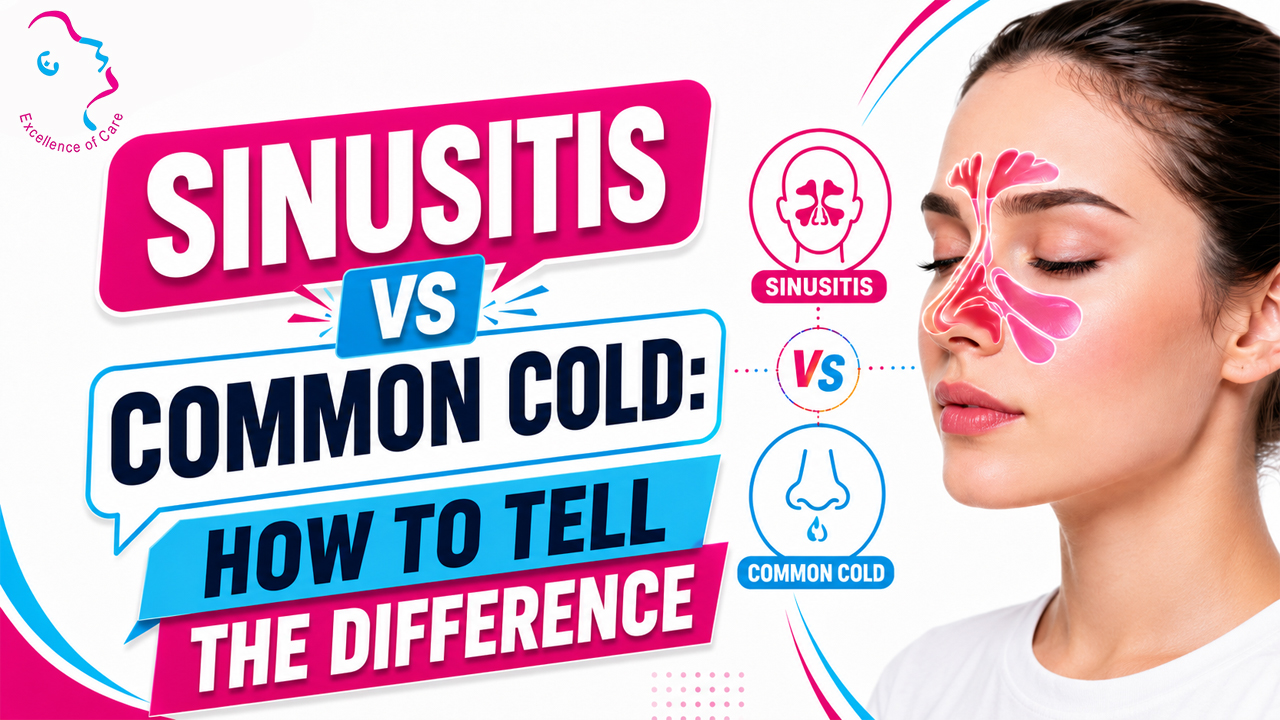
A common cold and sinusitis can look very similar at first. Both can cause nasal congestion, a runny nose, cough, headache and tiredness. The main clues are often how long the symptoms last, whether they are improving or worsening, and whether prominent facial pressure or persistent sinus symptoms develop.
A common cold is a viral upper-respiratory infection and usually improves on its own. CDC guidance states that cold symptoms commonly peak within the first two to three days and usually last less than a week. Sinusitis, or rhinosinusitis, involves inflammation of one or more sinuses and may occur during or after a respiratory infection.
If symptoms persist, worsen after initially improving, keep returning or involve significant facial pain or pressure, medical evaluation may be appropriate.
This guide explains sinusitis vs common cold, how the symptoms differ and when you may need an ENT assessment.
What Is a Common Cold?
A common cold is a viral infection affecting the upper respiratory tract, especially the nose and throat.
Many different respiratory viruses can cause a cold. According to the CDC, typical symptoms include runny nose, nasal congestion, cough, sneezing, sore throat, headache, mild body aches and sometimes a low-grade fever. Symptoms commonly peak within two to three days.
For most people, the symptoms then gradually begin to improve.
A cold can still make your nose feel completely blocked and may even cause temporary pressure around your face. Therefore, congestion or a headache alone does not mean you have sinusitis.
What Is Sinusitis?
Sinusitis, also called rhinosinusitis, means inflammation of the sinus and nasal lining.
The sinuses are air-filled spaces located around the nose, cheeks, forehead and eyes. They connect to the nasal cavity through small drainage pathways.
When the sinus lining becomes inflamed, swelling can interfere with normal drainage. This may contribute to:
- Blocked nose
- Facial pain or pressure
- Runny nose
- Nasal discharge
- Post-nasal drip
- Reduced smell
- Headache
- Cough
CDC guidance notes that viruses cause many sinus infections, although bacteria can cause some cases. A previous cold and seasonal allergies are among factors associated with sinus infections.
This is why sinusitis frequently becomes confusing: a viral cold and early sinus inflammation can exist along the same spectrum rather than behaving like completely unrelated illnesses.
Sinusitis vs Common Cold: What Is the Main Difference?
The symptoms overlap, so the distinction should not be based on one symptom alone.
| Feature | Common Cold | Sinusitis |
| Runny nose | Very common | Common |
| Blocked nose | Common | Common |
| Sneezing | Common | May occur |
| Sore throat | Common | Can occur, often with post-nasal drip |
| Cough | Common | Can occur |
| Facial pressure | Can occur | More characteristic |
| Reduced smell | Can occur temporarily | Can occur |
| Post-nasal drip | Possible | Common |
| Headache | Possible | May occur with sinus pressure |
| Symptom pattern | Usually gradually improves | May persist or worsen |
| Recurrent episodes | Possible | Repeated episodes deserve assessment |
| ENT evaluation | Usually unnecessary for uncomplicated cold | May be useful when persistent, recurrent or atypical |
CDC describes common-cold symptoms as typically peaking early and improving, whereas sinus-infection guidance recommends medical assessment when symptoms become severe, worsen after initial improvement or last more than 10 days without improvement.
The practical message is simple:
Do not diagnose sinusitis only because your nose is blocked. Pay attention to the pattern.
Can a Common Cold Turn Into Sinusitis?
Yes. Sinus inflammation can develop during or after a viral respiratory infection such as a common cold.
Acute sinusitis is often triggered by a viral upper-respiratory infection. Swelling inside the nose and sinus drainage pathways can interfere with drainage and create sinus symptoms.
This does not mean every cold becomes bacterial sinusitis.
Many cases remain viral and improve without antibiotics. CDC guidance specifically notes that many sinus infections do not need antibiotics.
That distinction is important because using antibiotics unnecessarily can cause side effects and contributes to antimicrobial resistance.
When Might Your Symptoms Be More Than a Common Cold?
Several patterns deserve more attention than an uncomplicated cold.
1. Symptoms are not improving after around 10 days
Persistent symptoms without meaningful improvement can raise the possibility of acute sinusitis and, depending on the complete clinical picture, bacterial rhinosinusitis.
Current guidance uses symptom duration together with other findings rather than duration alone.
2. You improve and then suddenly become worse
This pattern is sometimes described clinically as “double worsening.”
For example:
You develop congestion and cough.
You begin feeling better.
Then facial pressure, discharge or other symptoms become significantly worse again.
This pattern can make bacterial sinusitis more likely and deserves medical assessment.
3. Facial pain or pressure becomes significant
Sinusitis may cause pressure or pain around the:
- Cheeks
- Forehead
- Eyes
- Nose
However, not every facial headache comes from the sinuses. ENT Care Center's own specialist-consultation guidance notes that facial headache may have causes other than sinus disease.
4. Symptoms keep returning
Repeated episodes of nasal blockage, facial pressure, thick discharge or reduced smell should not simply be treated as “another cold” indefinitely.
ENT Care Center lists recurrent sinus symptoms among reasons that may justify specialist assessment or nasal endoscopy.
5. Your smell remains reduced
A cold can temporarily reduce smell because the nose is congested.
Persistent or recurrent smell loss, particularly when associated with nasal blockage or sinus symptoms, may require closer assessment for conditions such as inflammation, nasal polyps or structural obstruction.
Does Yellow or Green Mucus Mean You Have a Bacterial Sinus Infection?
Not by itself.
The color of nasal mucus cannot reliably determine whether an infection is viral or bacterial.
Clinical guidance considers discoloured or purulent discharge together with other features such as symptom duration, fever, severe localized pain and worsening after an initially milder phase.
So this approach is misleading:
Green mucus = antibiotics required.
A more useful approach is:
What symptoms do I have, how long have they lasted, are they improving, and are they becoming more severe?
An appropriate clinician can use the complete pattern rather than mucus color alone to decide whether further assessment or treatment is necessary.
Allergy vs Common Cold vs Sinusitis: How Can You Tell?
Allergic rhinitis can create another layer of confusion because it can also cause:
- Runny nose
- Blocked nose
- Sneezing
- Nasal irritation
A particularly useful clue is itching.
The American Academy of Allergy, Asthma & Immunology lists itching of the nose, throat or eyes, sneezing, runny nose, congestion and watery eyes among typical allergic-rhinitis symptoms.
| Feature | Common Cold | Sinusitis | Nasal Allergy |
| Sneezing | Common | Possible | Very common |
| Itchy nose/eyes | Less typical | Less typical | Characteristic |
| Watery eyes | Possible | Less typical | Common |
| Nasal congestion | Common | Common | Common |
| Facial pressure | Possible | Commoner | Can occur |
| Fever | Sometimes | May occur | Not typical |
| Trigger pattern | Respiratory virus | Often follows infection/inflammation | Dust, pollen or other allergens |
| Repeated seasonal symptoms | Less typical | Possible | Common |
| Reduced smell | Temporary | Can occur | Can occur with congestion |
ENT Care Center provides allergy testing and treatment in Kathmandu for patients with recurrent sneezing, runny nose, blocked nose and allergy-related sinus symptoms. Its service page also notes that assessment may help determine whether symptoms relate to allergy, sinusitis, nasal blockage or another ENT condition.
How Is Sinusitis Diagnosed?
Sinusitis is diagnosed by considering symptoms, duration, examination findings and, when needed, additional tests.
Not every patient with sinus symptoms requires imaging or nasal endoscopy.
Medical history
An ENT doctor may ask about:
- When symptoms started
- Whether they are improving
- Whether symptoms improved and then became worse
- Previous episodes
- Facial pressure
- Nasal discharge
- Smell changes
- Allergies
- Previous medicines
- Previous sinus treatment
This symptom history is especially important because the timing and progression help distinguish a routine viral illness from a more persistent sinus problem.
ENT examination
The specialist examines the nose and related ENT structures.
At ENT Care Center, a standard ENT specialist consultation in Kathmandu includes symptom review, relevant medical history and focused examination before deciding whether additional testing is necessary.
Nasal endoscopy
A nasal or ENT endoscopy uses a thin camera to view areas inside the nose and around the sinus openings that may be difficult to see with a basic examination.
It may help identify:
- Inflammation
- Thick mucus
- Nasal polyps
- Structural narrowing
- Deviated nasal septum
- Sinus drainage problems
ENT Care Center states that nasal endoscopy may be considered for persistent nasal blockage, recurrent sinus symptoms, nasal polyps, reduced smell or post-nasal drip. It also clearly notes that not every patient needs endoscopy.
CT scan
A CT scan can show deeper sinus anatomy that cannot be fully assessed with nasal endoscopy.
Imaging is not automatically required for every episode of uncomplicated acute sinusitis. The decision depends on symptoms, examination findings and whether complications, chronic disease, surgical planning or another diagnosis needs to be considered.
How Is Sinusitis Treated?
Treatment depends on whether the problem is acute or chronic, viral or possibly bacterial, allergy-related, recurrent, or associated with a structural problem such as nasal polyps or a deviated septum.
There is therefore no single “best medicine” for every sinus problem.
For many acute sinus infections, supportive care and time may be enough. CDC guidance notes that many sinus infections improve without antibiotics.
Depending on the diagnosis, an ENT specialist may discuss:
- Symptom-relief measures
- Nasal care
- Allergy management
- Appropriate medicines
- Monitoring
- Follow-up
- Further investigation
- Surgical treatment in selected cases
ENT Care Center's sinus treatment in Kathmandu focuses on identifying the cause of symptoms before choosing treatment. Its verified service page states that treatment planning may involve medicines, allergy management, nasal-care guidance, lifestyle advice, follow-up or surgical planning when clinically needed.
What about antibiotics?
Antibiotics do not treat viral colds.
They are also not necessary for every case of sinusitis.
A healthcare professional should determine whether the clinical pattern suggests a bacterial infection and whether antibiotics are appropriate.
When Should You See an ENT Doctor for Sinus Symptoms?
Consider an ENT assessment when symptoms are persistent, recurrent, worsening, unusually severe or affecting nasal breathing and daily life.
CDC recommends medical care when sinus symptoms include severe headache or facial pain, worsen after initial improvement, last more than 10 days without improving, involve prolonged fever or occur repeatedly.
An ENT consultation may also be useful for:
- Persistent nasal blockage
- Recurrent sinus infections
- Persistent facial pressure
- Reduced sense of smell
- Recurrent post-nasal drip
- Suspected nasal polyps
- Possible deviated septum
- Symptoms that do not respond as expected
- Uncertainty between sinusitis, allergy and another nasal condition
ENT Care Center lists these types of persistent sinus and nasal symptoms among reasons for specialist consultation.
Seek urgent medical attention rather than waiting for a routine clinic appointment if symptoms are severe or associated with concerning neurological, breathing or rapidly progressive symptoms.
Sinus Treatment in Kathmandu: When Specialist Evaluation May Help
If your “cold” keeps returning, your nose remains blocked, facial pressure continues or sinus symptoms persist beyond the expected course of a routine respiratory infection, an ENT assessment can help identify the underlying cause.
ENT Care Center provides sinus treatment in Kathmandu for sinusitis, recurrent sinus symptoms, nasal allergy, nasal blockage, nasal polyps and related conditions. The clinic is located on Madan Bhandari Road, Kathmandu and provides specialist ENT consultation and endoscopic assessment when clinically appropriate.
The center's team includes Dr. Rishi Bhatta, an ENT–Head & Neck Surgeon whose listed qualifications include MBBS, MS and fellowship training in Rhinology and Skull Base Surgery.
Persistent symptoms do not automatically mean you need a scan, antibiotics or surgery.
The goal of specialist evaluation is first to answer a more important question:
What is actually causing the symptoms?
If sinus pressure, blocked nose or recurrent nasal symptoms are not improving, you can book an ENT specialist consultation at Best ENT Clinic in Kathmandu, Nepal, ENT Care Center for an appropriate assessment.
Key Takeaways
Sinusitis vs common cold is best distinguished by the overall symptom pattern—not one symptom.
A common cold usually begins as a viral upper-respiratory infection and gradually improves. Sinusitis can develop during or after a cold and may cause persistent congestion, facial pressure, post-nasal drip and reduced smell.
Pay particular attention when symptoms:
- Persist without improvement
- Become worse after initially improving
- Keep recurring
- Cause significant facial pain or pressure
- Affect smell or nasal breathing
When symptoms do not follow the expected pattern of a simple cold, professional evaluation can clarify whether the cause is sinusitis, allergy, nasal polyps, structural blockage or another ENT condition.
Frequently Asked Questions
What is the difference between sinusitis and a common cold?
A common cold is a viral upper-respiratory infection, while sinusitis involves inflammation of the sinus and nasal lining. Their symptoms overlap, but a cold usually gradually improves, whereas persistent or worsening nasal congestion, facial pressure and sinus symptoms may justify evaluation for sinusitis.
How can you tell if you have a cold or sinus infection?
The pattern is often more useful than one symptom. A routine cold usually peaks early and begins improving. Sinusitis should be considered when symptoms remain persistent, worsen after initial improvement, cause significant facial pressure or recur frequently. A clinician should make the diagnosis when symptoms are unclear.
How long does a common cold usually last?
CDC guidance states that common colds usually last less than a week, although individual symptoms such as cough or congestion can sometimes linger longer. Symptoms generally peak within the first two to three days.
Can a common cold turn into sinusitis?
Yes. Acute sinusitis often develops during or after a viral upper-respiratory infection. Swelling can interfere with sinus drainage and produce facial pressure, congestion and discharge. However, this does not automatically mean the sinusitis is bacterial or requires antibiotics.
What symptoms suggest sinusitis instead of a cold?
Persistent blocked nose, facial pain or pressure, reduced smell, post-nasal drip and symptoms that do not improve or become worse after initial improvement can raise suspicion of sinusitis. These symptoms overlap with other conditions, so persistent or recurrent problems may need examination.
Does facial pressure mean I have sinusitis?
No. Facial pressure can occur with sinus disease, but it is not specific enough to confirm sinusitis. Migraine, dental problems and other conditions may cause facial or head pain. ENT Care Center advises proper assessment rather than assuming every facial headache is sinus-related.
Does green or yellow mucus mean I need antibiotics?
No. Mucus color alone does not prove a bacterial infection or show that antibiotics are needed. Clinical guidance considers several factors together, including duration, severe localized pain, fever and worsening after initial improvement.
Is sinusitis contagious?
Sinusitis itself is not always something that passes directly from person to person. However, a respiratory virus causing a cold and subsequent sinus inflammation can spread between people. The underlying cause therefore matters.
Can allergies be mistaken for sinusitis or a cold?
Yes. Allergic rhinitis can cause sneezing, runny or blocked nose and nasal congestion. Itchy nose, throat or eyes and watery eyes are particularly suggestive of allergy.
When should I see an ENT doctor for sinus symptoms?
Consider ENT assessment when symptoms persist, repeatedly return, worsen after initial improvement or are associated with significant facial pain, persistent nasal blockage, reduced smell or recurrent sinus infections.
Is nasal endoscopy needed for every sinus problem?
No. Nasal endoscopy is not required for every patient. An ENT specialist may recommend it when symptoms are persistent, recurrent or difficult to explain, or when nasal polyps, structural blockage or sinus-drainage problems are suspected.
Where can I get sinus treatment in Kathmandu?
ENT Care Center provides sinus evaluation and treatment at Madan Bhandari Road, Kathmandu. Its verified services include ENT specialist consultation, sinus treatment, nasal endoscopy, nasal blockage treatment, allergy care and nasal-polyp evaluation.