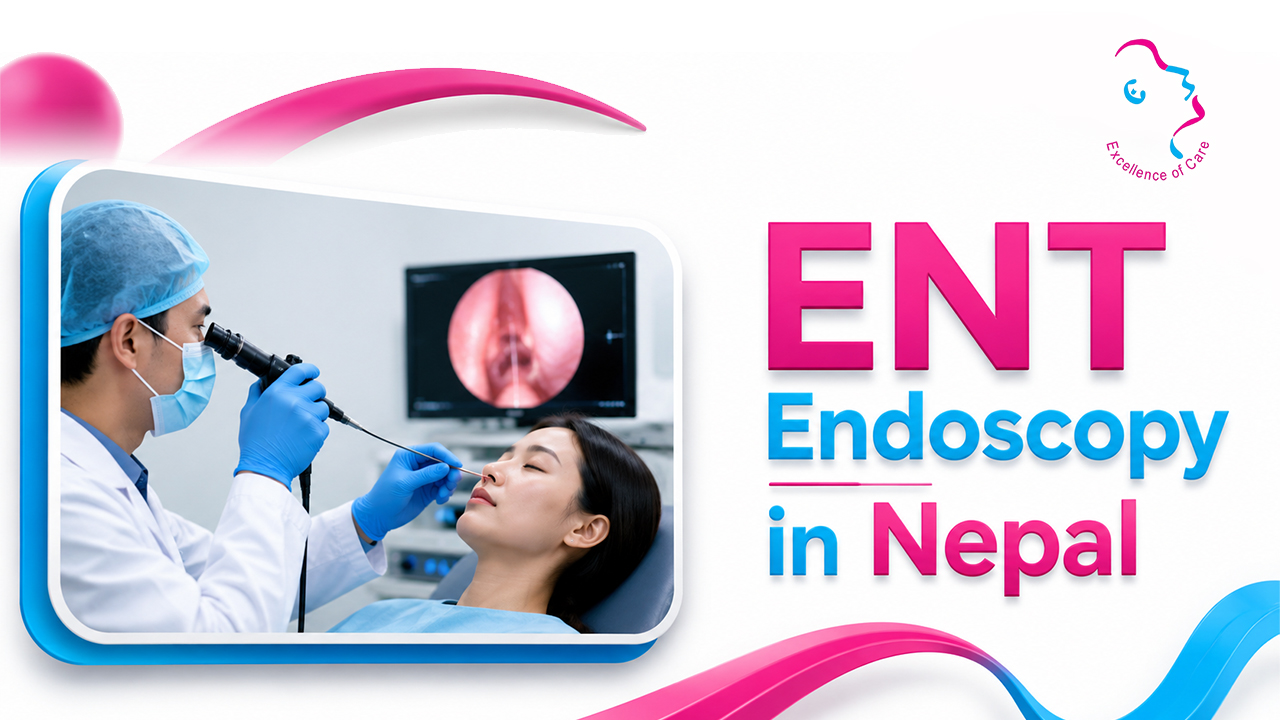
ENT Endoscopy is a diagnostic procedure used by an ENT specialist to examine deeper areas of the nose, throat, voice box, and sometimes the ear using a thin tube with a light and camera. If you have long-lasting nasal blockage, sinus symptoms, throat discomfort, hoarseness, swallowing difficulty, nosebleeds, or suspected airway issues, an ear nose throat endoscopy can help identify the cause more clearly than a routine examination.
For patients searching for an ENT hospital in Nepal, endoscopy is often recommended when symptoms are persistent, recurring, one-sided, or not fully explained by a basic check-up. ENT Care Center in Kathmandu provides specialist ENT services including sinus care, voice and swallowing disorder care, hearing evaluation, ear surgery, allergy care, sleep apnea care, and other ear, nose, throat, head and neck services.
This guide explains what ENT endoscopy is, when it is needed, what happens during the procedure, whether it is painful, and how to prepare.
Quick Answer: What Is ENT Endoscopy?
ENT endoscopy is a close-view examination of the ear, nose, throat, voice box, or airway using an endoscope. The endoscope may be flexible or rigid, depending on which area needs to be checked.
| Type of ENT Endoscopy | Area Examined | Common Use |
| Nasal endoscopy | Nose and sinus openings | Blocked nose, sinusitis, polyps, nosebleeds |
| Nasoendoscopy | Nose, back of nose, throat, voice box | Hoarseness, throat symptoms, swallowing concerns |
| Throat endoscopy / laryngoscopy | Voice box and throat | Voice change, throat pain, suspected lesions |
| Ear endoscopy | Ear canal and eardrum | Ear disease evaluation or endoscopic ear surgery planning |
| Endoscopic sinus evaluation | Nose and sinus drainage pathways | Chronic sinus problems and pre-surgery assessment |
Nasal endoscopy is commonly used when the nose or sinuses cannot be fully assessed with routine examination. The American Academy of Otolaryngology–Head and Neck Surgery says diagnostic nasal endoscopy is used when a disease or condition in the nose or sinuses is not adequately visible during a routine exam.
Why Is ENT Endoscopy Important?
Many ENT symptoms begin mildly. A blocked nose may be treated as a cold. Hoarseness may be blamed on voice strain. Throat discomfort may be linked to acid reflux or infection. Ear blockage may be assumed to be wax.
Sometimes that is true. But when symptoms continue, repeat, or affect daily life, a deeper look can be important.
ENT endoscopy helps the doctor directly view areas that are hard to see with the naked eye. It can help identify inflammation, swelling, infection, polyps, structural problems, foreign bodies, bleeding points, vocal cord issues, and suspicious growths.
ENT Care Center notes that modern ENT diagnostic tools, including video endoscopy, are used to examine deeper areas of the nose and throat and improve diagnostic accuracy.
What Is the Role of Endoscopy in ENT?
The main role of endoscopy in ENT is diagnosis and evaluation. It helps the ENT specialist see what is happening inside the nose, sinuses, throat, voice box, or ear.
It may be used to:
- Confirm the cause of blocked nose
- Check sinus drainage pathways
- Detect nasal polyps
- Evaluate repeated nosebleeds
- Examine the voice box in hoarseness
- Assess throat discomfort or swallowing symptoms
- Look for infection, swelling, or growths
- Monitor healing after ENT treatment or surgery
- Guide biopsy or minor procedures in selected cases
- Support planning for sinus, throat, or ear surgery
Cleveland Clinic describes nasal endoscopy as a procedure used to look inside the nasal cavity and the openings to the sinuses. It is commonly used for symptoms such as nasal congestion, facial pain, sinus headaches, nosebleeds, and loss of smell.
Types of ENT Endoscopy
1. Nasal Endoscopy
Nasal endoscopy is used to examine the inside of the nose and sinus openings.
It may be advised for:
- Long-term blocked nose
- Recurrent sinus infection
- Facial pressure or sinus headache
- Reduced smell
- Nasal allergy with persistent symptoms
- Nosebleeds
- Suspected nasal polyps
- Deviated septum evaluation
- Post-surgery follow-up
Johns Hopkins Medicine explains that nasal endoscopy uses a thin, flexible or rigid tube with a small camera and light to view the nasal and sinus passages. It is often done by an ENT doctor in the office and is considered safe and well tolerated when performed by an experienced doctor.
2. Throat Endoscopy / Laryngoscopy
A throat endoscopy helps examine the throat, voice box, and vocal cords. It may also be called laryngoscopy or laryngeal endoscopy.
It may be recommended for:
- Hoarseness
- Voice change
- Throat pain that does not improve
- Feeling of a lump in the throat
- Difficulty swallowing
- Frequent choking sensation
- Chronic cough
- Suspected vocal cord problem
- Follow-up of throat lesions
Newcastle Hospitals describes laryngeal endoscopy as a detailed assessment of the voice box and throat using a thin flexible camera passed through the nose. The patient may be asked to perform voice or throat movements so the clinician can examine how the structures work.
3. Nasoendoscopy
Nasoendoscopy is a flexible endoscopic test that looks inside the nose, the back of the nose, the throat, and the voice box.
It is commonly used by ENT specialists. Patient.info explains that a nasoendoscope is a thin flexible telescope passed through the nose to view the nasal passage, back of the throat, and larynx.
It may be used when symptoms affect both the nose and throat, such as postnasal drip, chronic throat clearing, voice change, snoring, or swallowing difficulty.
4. Ear Endoscopy
Ear endoscopy may be used to examine the ear canal and eardrum with a high-quality camera view. It may help in evaluating ear discharge, eardrum perforation, wax, infection, or surgical planning.
In some hospitals, endoscopic ear surgery is also used for selected ear conditions. However, diagnostic ear endoscopy and endoscopic ear surgery are not the same. A diagnostic check is usually quick, while surgery requires a separate plan, consent, and operating setup.
5. Endoscopic Sinus Evaluation
An endoscopic sinus evaluation is helpful when sinus symptoms are chronic, recurrent, or not improving with standard treatment.
It may help assess:
- Sinus drainage openings
- Nasal polyps
- Swelling inside the nose
- Thick discharge
- Deviated septum
- Post-surgical healing
- Areas needing CT scan correlation
Nasal endoscopy can sometimes detect nasal and sinus findings that may be missed with routine anterior examination alone. A published paper by Levine noted that office nasal endoscopy can identify nasal and sinus pathology that may be missed by routine speculum and nasopharyngeal examination.
When Should You Consider ENT Endoscopy?
An ENT specialist may recommend endoscopy if symptoms are persistent, recurring, unusual, or concerning.
| Symptom | Why Endoscopy May Help |
| Blocked nose for weeks | Checks septum, allergy swelling, polyps, sinus drainage |
| Recurrent sinusitis | Looks for inflammation, discharge, anatomical blockage |
| Nosebleeds | Helps locate bleeding area or abnormal growth |
| Reduced smell | Evaluates swelling, infection, polyps, or obstruction |
| Hoarseness over 2 weeks | Checks vocal cords and voice box |
| Throat pain that persists | Looks for inflammation, lesions, or other causes |
| Difficulty swallowing | Evaluates throat and laryngeal movement |
| Chronic cough or throat clearing | Checks larynx, postnasal drip, reflux-related changes |
| Snoring or mouth breathing | Assesses nasal blockage, adenoids, throat airway |
| Neck lump with throat symptoms | Helps check upper airway and throat structures |
ENT Care Center advises ENT evaluation for symptoms such as blocked nose, sinus pressure, hoarseness, sore throat, snoring, swallowing difficulty, hearing loss, dizziness, and neck lump when they persist or affect daily life.
What Happens During ENT Endoscopy?
The process depends on the type of endoscopy, but a typical ENT endoscopy visit may include:
1. Medical History
The ENT specialist asks about your symptoms, duration, triggers, medicines, allergies, past surgery, smoking history, voice use, reflux symptoms, and previous test results.
2. Basic ENT Examination
The doctor may first examine your ear, nose, mouth, throat, neck, and sometimes hearing or balance symptoms.
3. Preparation
For nasal endoscopy, the nose may be sprayed with a decongestant and topical anesthetic. The AAO-HNS clinical indicator explains that the nose may be sprayed before insertion of a rigid or flexible endoscope.
4. Scope Insertion
The endoscope is gently passed into the nose or positioned to examine the required area. For flexible nasoendoscopy, the tube passes through the nostril and backward to view the throat and voice box.
5. Examination on Screen
The ENT specialist views the structures on a screen. You may be asked to breathe, swallow, speak, say “eee,” or move your tongue depending on the examination.
6. Explanation of Findings
After the procedure, the doctor explains what was seen and whether medicines, imaging, allergy care, biopsy, surgery, or follow-up is needed.
Is ENT Endoscopy Painful?
Most office-based ENT endoscopy procedures are not severely painful, but they may feel unusual or mildly uncomfortable.
You may feel:
- Pressure in the nose
- Tickling or watering eyes
- Mild throat sensation
- Need to sneeze
- Temporary numbness after spray
- Mild gagging during throat examination
The procedure is usually short. Johns Hopkins Medicine notes that nasal endoscopy is safe and well tolerated when performed by an experienced doctor.
Some patients may feel anxious before the test. Tell the ENT specialist if you have a strong gag reflex, past fainting during procedures, bleeding tendency, severe nasal blockage, or previous difficult endoscopy.
Is ENT Endoscopy Safe?
ENT endoscopy is generally considered safe when performed by trained ENT professionals using proper equipment and infection-control methods.
Possible minor effects may include:
- Temporary nasal irritation
- Sneezing
- Watery eyes
- Mild nosebleed
- Throat numbness for a short time
- Mild discomfort
Serious complications are uncommon. However, every patient is different. People taking blood thinners, those with bleeding disorders, recent nasal injury, severe infection, or complex medical conditions should inform the doctor before the procedure.
Is Endoscopy a Minor Surgery?
Most diagnostic ENT endoscopy is not surgery. It is a minimally invasive examination.
However, the word “endoscopy” can also be used for procedures performed in an operation theatre. For example, direct laryngoscopy, pharyngoscopy, upper esophagoscopy, endoscopic sinus surgery, or biopsy may involve anesthesia and surgical instruments.
Cleveland Clinic Abu Dhabi describes endoscopy generally as a non-surgical, minimally invasive procedure used to look inside the body, while some endoscopes may allow instruments for tissue removal or treatment.
So the answer depends on the type:
| Type | Is It Surgery? | Setting |
| Diagnostic nasal endoscopy | Usually no | OPD/clinic |
| Flexible throat endoscopy | Usually no | OPD/clinic |
| Endoscopy with biopsy | Minor procedure/surgical step | Clinic or OT depending on case |
| Direct laryngoscopy under anesthesia | Yes, minor operation | Operation theatre |
| Endoscopic sinus surgery | Yes | Operation theatre |
Does an ENT Perform an Endoscopy?
Yes. An ENT specialist, also called an otolaryngologist, commonly performs nasal endoscopy, throat endoscopy, and related ear, nose, and throat endoscopic examinations.
In Nepal, patients may search for an ent specialist or ent hospital in Nepal when they need endoscopy for sinus, nose, throat, voice, swallowing, or airway evaluation.
ENT Endoscopy vs Regular ENT Examination
A regular ENT check-up is useful, but some areas cannot be seen clearly without an endoscope.
| Feature | Regular ENT Exam | ENT Endoscopy |
| Tool used | Light, speculum, mirror, otoscope | Thin scope with light/camera |
| View | Surface-level view | Deeper, magnified view |
| Areas seen | Ear canal, mouth, front nose, throat | Nose, sinus openings, nasopharynx, larynx |
| Helpful for | Basic symptoms | Persistent or unclear symptoms |
| Image/video | Usually no | Often yes |
| Treatment planning | Basic | More detailed |
A routine exam may be enough for simple earwax, mild sore throat, or short-term cold symptoms. Endoscopy becomes more useful when symptoms persist or deeper structures need evaluation.
ENT Endoscopy vs CT Scan: Which Is Better?
ENT endoscopy and CT scan are different tools. One does not always replace the other.
| Test | What It Shows Best | Limitation |
| ENT endoscopy | Surface inside nose/throat, swelling, polyps, discharge, vocal cord movement | Cannot see deep bone or full sinus cavities |
| CT scan | Bone structure, sinus cavities, deep disease, surgical planning | Does not show live movement or mucosal surface as directly |
| MRI | Soft tissue detail, selected tumors, nerve/brain-related concerns | Not routine for every ENT symptom |
For chronic sinus problems, an ENT specialist may use both nasal endoscopy and CT scan if needed. The decision depends on symptoms and examination findings.
Conditions ENT Endoscopy Can Help Diagnose
ENT endoscopy may support diagnosis of many conditions.
Nose and Sinus Conditions
- Allergic rhinitis
- Chronic sinusitis
- Nasal polyps
- Deviated nasal septum
- Turbinate enlargement
- Fungal sinus disease
- Nosebleed source
- Nasal masses
- Foreign body in children
- Post-surgery healing concerns
Throat and Voice Conditions
- Vocal cord swelling
- Vocal cord nodules or polyps
- Laryngitis
- Reflux-related throat irritation
- Vocal cord paralysis
- Throat lesions
- Swallowing-related throat problems
- Suspected head and neck cancer
Cancer Research UK describes laryngoscopy as a test used to look at the back of the throat and voice box and check for changes or abnormal areas.
Airway and Sleep-Related Conditions
- Snoring-related obstruction
- Mouth breathing causes
- Enlarged adenoids in children
- Nasal blockage contributing to sleep difficulty
- Upper airway narrowing
ENT Care Center lists sleep apnea treatment and voice/swallowing care among its ENT services.
Red Flag Symptoms: When Not to Delay ENT Evaluation
Seek prompt ENT evaluation if you have:
| Red Flag Symptom | Why It Matters |
| Hoarseness lasting more than 2 weeks | Vocal cord evaluation may be needed |
| Blood from nose or throat | Needs proper examination |
| One-sided nasal blockage | May need endoscopic assessment |
| Neck lump | Should not be ignored |
| Difficulty swallowing | Needs throat evaluation |
| Breathing difficulty | May be urgent |
| Severe nosebleed | May need immediate care |
| Sudden hearing loss | Urgent ENT assessment is important |
| Persistent ear discharge | May involve eardrum or middle ear disease |
These symptoms do not always mean a serious disease, but they should be checked.
ENT Endoscopy Cost in Nepal: What Affects the Price?
The cost of ENT endoscopy in Nepal can vary depending on the hospital or clinic, type of scope, whether video recording is used, whether anesthesia is needed, and whether any additional procedure is performed.
Possible cost factors include:
- Consultation fee
- Type of endoscopy
- Flexible vs rigid scope
- Video recording or image capture
- Topical anesthetic spray
- Biopsy or sample collection
- Need for OT or general anesthesia
- Additional tests such as hearing test, CT scan, allergy test, or lab work
For ENT Care Center, patients should contact the clinic directly for the latest price because fees may change.
What Is the Cost of an ENT Endoscope?
This question can mean two things.
If you mean the patient procedure cost, ENT endoscopy in Nepal may range from a lower public-hospital fee to a higher private-clinic fee depending on the setting and type of procedure. Confirm with the provider before booking.
If you mean the equipment cost, professional ENT endoscopes and camera systems are medical devices used by hospitals and clinics. Their price varies widely depending on brand, type, camera system, light source, monitor, recording setup, sterilization system, and warranty.
For patients, the important cost is the examination or procedure fee, not the equipment purchase price.
How to Prepare for ENT Endoscopy
Most diagnostic nasal or throat endoscopy needs little preparation.
Before your visit:
- Bring previous prescriptions, CT scans, X-rays, or reports
- Tell the doctor about allergies
- Share blood thinner use or bleeding history
- Mention pregnancy if relevant
- Inform the doctor about nasal surgery or injury
- Avoid heavy meals if you have a strong gag reflex
- Ask whether you can drive home afterward
- Ask if local anesthetic spray will be used
For office nasal endoscopy, most people can return to normal activity soon after. If anesthesia or biopsy is planned, preparation instructions may be different.
What Happens After ENT Endoscopy?
After a basic office-based endoscopy, the ENT specialist may explain the findings immediately.
You may be advised:
- Medicine for allergy, infection, reflux, or inflammation
- Saline nasal rinse
- Nasal spray
- Voice rest or voice therapy
- Hearing or allergy tests
- CT scan or MRI
- Biopsy if a suspicious lesion is seen
- Follow-up endoscopy
- Surgery in selected cases
If anesthetic spray was used in the throat, avoid eating or drinking until the numbness wears off, unless your doctor advises otherwise. The AAO-HNS clinical indicator notes that the throat may feel numb for several minutes after anesthetic use.
How ENT Endoscopy Helps Children
Children may need ENT endoscopy for specific concerns, especially when symptoms affect breathing, sleep, speech, hearing, or feeding.
Common reasons include:
- Mouth breathing
- Snoring
- Suspected enlarged adenoids
- Recurrent sinus symptoms
- Foreign body in nose
- Noisy breathing
- Voice change
- Swallowing concerns
Some children tolerate flexible endoscopy in clinic. Younger children or highly anxious children may need special preparation, child-friendly explanation, or a different setting. The AAO-HNS states that nasal endoscopy can be done in adults and children, though children may sometimes require general anesthesia.
Why Choose an ENT Care Center for ENT Evaluation in Nepal?
Patients searching for an ent hospital in Nepal usually want specialist diagnosis, proper equipment, and clear treatment guidance.
ENT Care Center is a dedicated ENT facility in Kathmandu providing services for ear, nose, throat, hearing, sinus, voice, sleep, allergy, and head-neck conditions. Its team includes ENT-head and neck surgeons, otolaryngologists, and audiology professionals.
A focused ENT evaluation may help patients who have:
- Long-lasting sinus problems
- Nasal blockage
- Ear infections or hearing issues
- Hoarseness
- Swallowing difficulty
- Snoring or suspected sleep apnea
- Throat discomfort
- Neck swelling
- Recurrent ENT symptoms
Specialist evaluation helps match the test to the symptom instead of doing unnecessary tests.
Questions to Ask Before ENT Endoscopy
Before undergoing endoscopy, ask your ENT specialist:
- Why do I need this endoscopy?
- Which area will be examined?
- Will it be flexible or rigid endoscopy?
- Will anesthetic spray be used?
- How long will it take?
- Is there any risk of bleeding or discomfort?
- What symptoms should I report afterward?
- Will I need a CT scan or biopsy?
- What is the total cost?
- When will I receive results or treatment advice?
Clear questions help reduce anxiety and improve decision-making.
FAQs About ENT Endoscopy
What is the role of endoscopy in ENT?
ENT endoscopy helps doctors see deeper areas of the nose, sinuses, throat, voice box, and airway. It is used to diagnose persistent symptoms, check abnormal findings, monitor treatment, and plan surgery when needed.
What is endoscopy ENT?
ENT endoscopy is a camera-based examination performed by an ENT specialist. It uses a thin flexible or rigid endoscope to view the nose, throat, voice box, ear, or sinus openings.
Is an ENT endoscopy painful?
Usually, ENT endoscopy is not severely painful. Most patients feel mild pressure, tickling, watering eyes, or temporary throat/nose discomfort. A numbing spray may be used for comfort.
What is the cost of an ENT endoscope?
If you mean the patient procedure cost, ENT endoscopy fees in Nepal vary by hospital, scope type, and whether additional procedures are needed. Public examples range from around NPR 600 to private-listed nasal endoscopy fees around NPR 2,500, but current fees should be confirmed directly.
Is endoscopy a minor surgery?
Diagnostic ENT endoscopy is usually not surgery. It is a minimally invasive examination. However, endoscopy with biopsy, direct laryngoscopy under anesthesia, or endoscopic sinus surgery may be considered a minor or major procedure depending on the case.
Does an ENT perform an endoscopy?
Yes. ENT specialists commonly perform nasal endoscopy, throat endoscopy, laryngoscopy, nasoendoscopy, and other ear, nose, and throat endoscopic evaluations.
Key Takeaway
ENT Endoscopy is a valuable diagnostic tool for examining areas of the nose, throat, voice box, airway, and ear that cannot be fully seen during a basic check-up. It is commonly used for persistent blocked nose, sinus symptoms, nosebleeds, hoarseness, throat discomfort, swallowing issues, snoring, and suspected structural problems.
Most diagnostic ENT endoscopy is quick, minimally invasive, and well tolerated. The exact need, cost, and type of endoscopy should be decided after consultation with an ENT specialist.
For patients in Nepal, a dedicated ENT evaluation at a specialist center can help identify the cause of symptoms early and guide the right treatment plan.
Author Bio
ENT Care Center
This article was prepared by the ENT Care Center Health Team for patient education and ENT awareness in Nepal. ENT Care Center provides specialist ear, nose, throat, hearing, sinus, voice, sleep, allergy, and head-neck care services in Kathmandu.