Obstructive Sleep Apnea is a common sleep related breathing disorder where the upper airway repeatedly becomes partly or fully blocked during sleep. These breathing pauses reduce oxygen, disturb sleep quality, and may cause loud snoring, gasping, morning headaches, and daytime sleepiness.
Sleep apnea should not be ignored. It is treatable, but proper diagnosis is important because symptoms can overlap with other sleep, nose, throat, lung, or heart-related conditions.
This article explains the symptoms, causes, risk factors, diagnosis, treatment options, and when to visit an ENT specialist.
Medical note: This blog is for general health education only. It should not replace medical consultation, diagnosis, or treatment from a qualified healthcare professional.
What Is Obstructive Sleep Apnea?
Obstructive Sleep Apnea, often called OSA, happens when the upper airway becomes blocked many times during sleep. The blockage can reduce or completely stop airflow for short periods. The National Heart, Lung, and Blood Institute describes OSA as the most common type of sleep apnea.
During sleep, muscles in the throat relax. In some people, the tongue, soft palate, tonsils, or throat tissues narrow the airway too much.
When breathing becomes difficult, the brain briefly wakes the body so breathing can restart. These awakenings may be so short that the person does not remember them.
However, the sleep becomes fragmented. That is why many people with sleep apnea wake up feeling tired even after spending enough hours in bed.
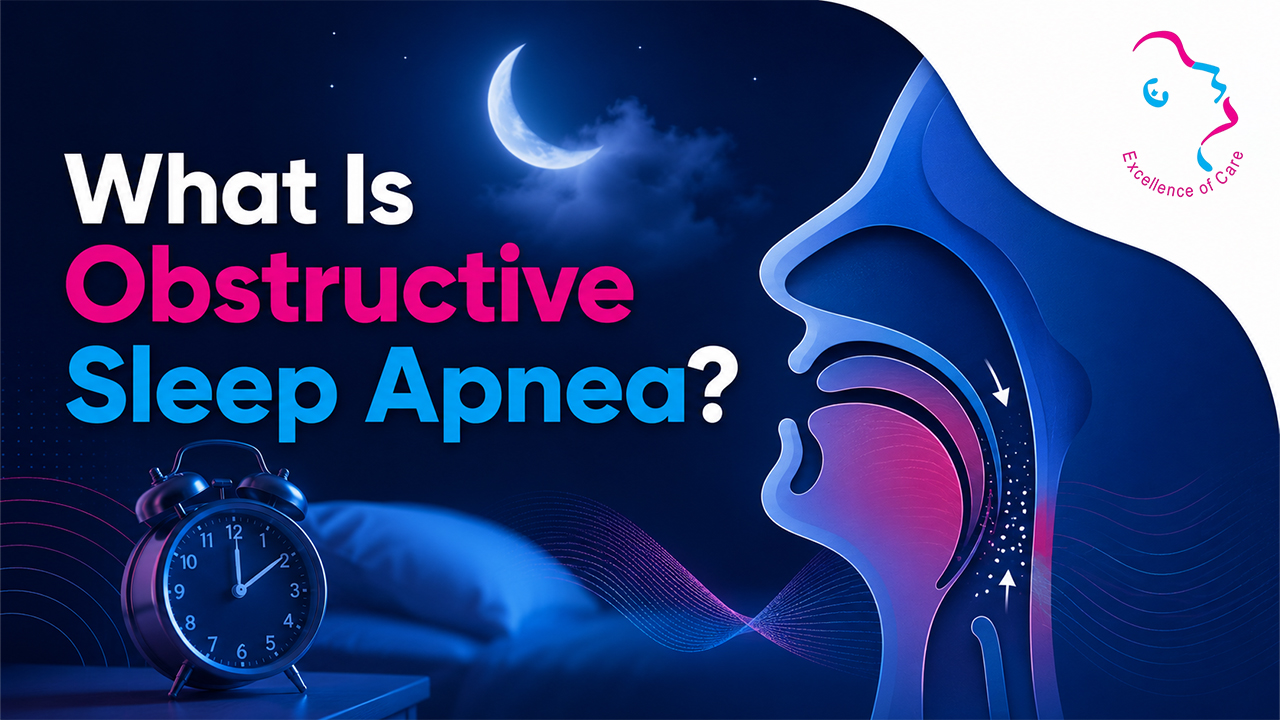
What Happens in Obstructive Sleep Apnea?
In obstructive sleep apnea, breathing repeatedly stops or becomes shallow because the upper airway is blocked during sleep. This may cause oxygen levels to fall, sleep to break into small fragments, and the body to work harder at night.
Common signs include:
| Common Sign | What It May Look Like |
| Loud snoring | Frequent, disruptive snoring noticed by family |
| Breathing pauses | Someone sees breathing stop during sleep |
| Gasping or choking | Waking suddenly with a choking feeling |
| Daytime sleepiness | Feeling sleepy at work, school, or while travelling |
| Morning headache | Waking with dull headache or heavy head |
| Poor concentration | Difficulty focusing during the day |
Not every person with OSA snores, and not every person who snores has OSA. A proper sleep evaluation is needed to confirm the condition.
Why Is Sleep Apnea Important?
Sleep apnea is not only a snoring problem.
Untreated sleep apnea may affect oxygen levels, sleep quality, blood pressure, heart health, mood, memory, and daytime alertness. NHLBI notes that sleep apnea can prevent the body from getting enough oxygen and may lead to poor sleep quality.
Research has estimated that about 936 million adults aged 30–69 years worldwide may have obstructive sleep apnea.
Many people remain undiagnosed because symptoms happen during sleep. Often, a spouse, family member, roommate, or travel partner notices the problem first.
For people in Nepal, persistent loud snoring, choking during sleep, or unexplained daytime tiredness should be taken seriously, especially if symptoms are affecting work, driving, study, or daily life.
What Are the Symptoms of Obstructive Sleep Apnea?
Symptoms may occur during sleep or during the daytime.
NHLBI lists common symptoms such as snoring, gasping for air, and breathing that stops and restarts during sleep.
Night-time Symptoms
Common night-time symptoms include:
- Loud or frequent snoring
- Pauses in breathing noticed by another person
- Waking up gasping, choking, or short of breath
- Restless sleep
- Frequent waking
- Dry mouth or sore throat in the morning
- Night-time sweating
- Frequent urination at night
Daytime Symptoms
Daytime symptoms may include:
- Excessive sleepiness
- Morning headache
- Poor concentration
- Irritability or mood changes
- Low energy
- Forgetfulness
- Reduced work performance
- Feeling unrefreshed after sleep
Some people do not feel sleepy but still have OSA. Others may think their tiredness is due to workload, stress, age, or poor routine.
That is why medical assessment matters.
What Causes Obstructive Sleep Apnea?
The main cause of obstructive sleep apnea is repeated blockage of the upper airway during sleep.
According to NHLBI, OSA may happen when structures such as the tongue or soft palate block airflow through the upper airway.
Several factors can contribute.
| Cause or Factor | How It May Contribute |
| Tongue falling backward | Can block the throat during sleep |
| Large tonsils or adenoids | Can narrow the airway, especially in children |
| Obesity or neck fat deposits | Can reduce airway space |
| Nasal blockage | Can worsen breathing during sleep |
| Small jaw or facial structure | May narrow the upper airway |
| Ageing | Airway tissues may become more collapsible |
| Family history | Anatomy and risk may run in families |
| Smoking | May increase airway inflammation |
| Alcohol or sedative use | Can relax throat muscles further |
NHLBI also notes that age, obesity, large tonsils, neck or tongue size, endocrine disorders, family history, heart or kidney failure, smoking, alcohol use, and sex can affect risk.
In children, enlarged tonsils and adenoids are common contributors. In adults, weight, throat anatomy, nasal obstruction, and lifestyle factors may all play a role.
Who Is at Higher Risk of Sleep Apnea?
Anyone can develop sleep apnea, but some people have higher risk.
Risk may be higher in people who:
- Snore loudly and frequently
- Have obesity or recent weight gain
- Have a large neck circumference
- Have blocked nose or chronic sinus problems
- Have enlarged tonsils
- Have high blood pressure
- Have diabetes or metabolic conditions
- Have a family history of sleep apnea
- Sleep mostly on their back
- Use alcohol or sedating medicines
- Are middle-aged or older
Men are diagnosed more often than women, but women can also develop OSA. Symptoms in women may sometimes be less typical, such as fatigue, insomnia, mood changes, or morning headache.
Children can also have sleep-disordered breathing. Parents may notice loud snoring, restless sleep, mouth breathing, poor school focus, or daytime behavioral changes.
Obstructive Sleep Apnea vs Central Sleep Apnea
Sleep apnea has more than one type.
The two main types are obstructive sleep apnea and central sleep apnea.
| Type | What Happens | Common Cause |
| Obstructive Sleep Apnea | Airway is blocked during sleep | Throat, tongue, tonsils, jaw, or soft tissue obstruction |
| Central Sleep Apnea | Brain does not send proper breathing signals | Conditions affecting breathing control |
| Mixed Sleep Apnea | Features of both types | Requires specialist evaluation |
NHLBI explains that obstructive sleep apnea is caused by upper airway blockage, while central sleep apnea is related to how the brain controls breathing during sleep.
Because treatment differs, people should not self-diagnose based only on snoring.
How Serious Is Obstructive Sleep Apnea?
Obstructive sleep apnea can be serious, especially when moderate to severe or untreated.
It may increase the risk of high blood pressure, heart disease, stroke, abnormal heart rhythms, diabetes related problems, poor concentration, work errors, and road accidents due to sleepiness. StatPearls notes that OSA has significant implications for cardiovascular health, mental well-being, quality of life, and driving safety.
The seriousness depends on:
- Number of breathing pauses per hour
- Oxygen level drops
- Daytime sleepiness
- Existing heart, lung, or metabolic disease
- Age and weight
- Whether treatment is used consistently
Mild OSA still deserves attention if symptoms affect daily life. Severe OSA needs timely medical management.
Seek urgent medical help if sleep-related breathing problems are accompanied by severe chest pain, fainting, severe breathing difficulty, confusion, or bluish lips.
How Is Obstructive Sleep Apnea Diagnosed?
Diagnosis usually begins with a medical history and physical examination.
The doctor may ask about snoring, choking, daytime sleepiness, morning headaches, sleep position, weight change, medications, medical conditions, and what family members notice during sleep.
An ENT specialist may examine the nose, throat, tonsils, tongue position, jaw structure, and airway anatomy.
The diagnosis is usually confirmed with a sleep study.
Common Diagnostic Methods
| Test | What It Does |
| Polysomnography | Overnight sleep test that records breathing, oxygen, sleep stages, heart rhythm, and movements |
| Home sleep apnea test | Measures breathing and oxygen-related data at home in selected adults |
| ENT evaluation | Checks nose, throat, tonsils, palate, tongue, and airway structure |
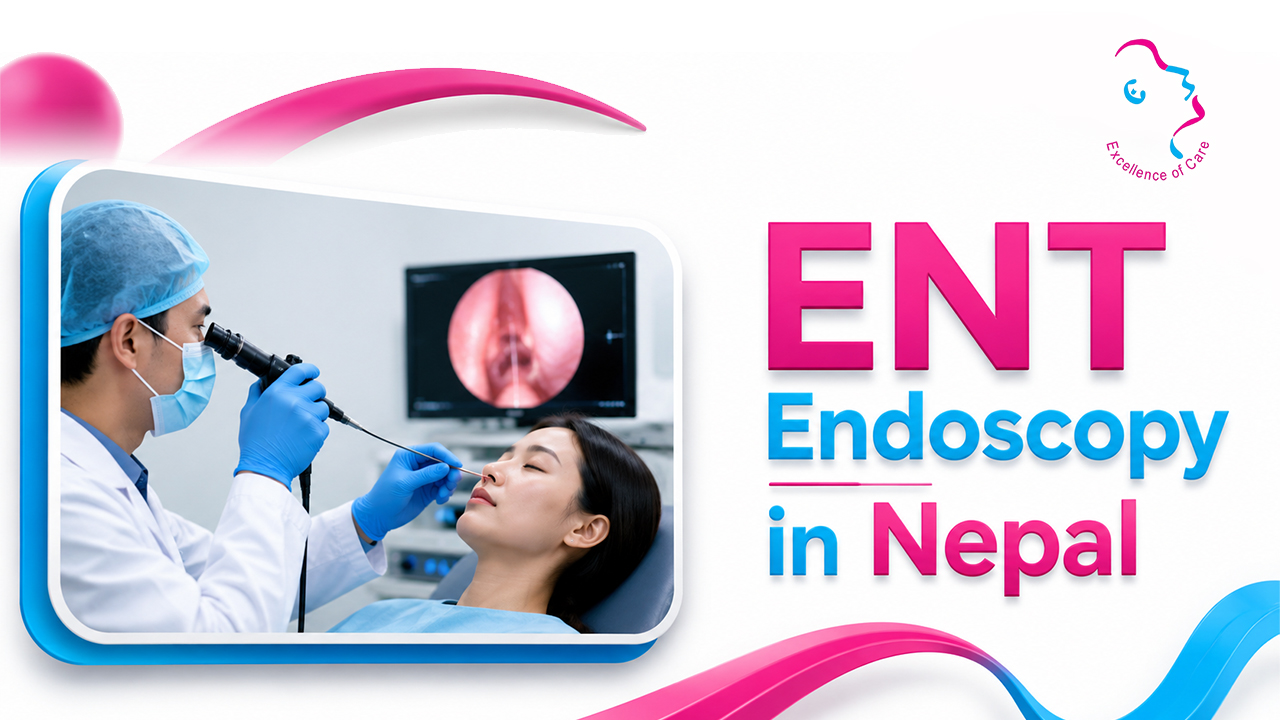
| Nasal endoscopy | May help identify nasal or throat obstruction |
| Sleep questionnaires | Help estimate risk but do not replace testing |
The American Academy of Sleep Medicine guideline supports polysomnography or home sleep apnea testing for diagnosis in appropriate adults, depending on clinical situation and risk.
A sleep study often reports an Apnea-Hypopnea Index, or AHI. This estimates how many breathing pauses or shallow breathing events happen per hour of sleep.
Severity Levels of Obstructive Sleep Apnea
OSA severity is often classified by AHI.
| Severity | AHI Range | Meaning |
| Normal or minimal | Fewer than 5 events/hour | Usually not diagnostic of OSA in adults |
| Mild OSA | 5–14 events/hour | Mild breathing disturbance |
| Moderate OSA | 15–29 events/hour | More frequent breathing pauses |
| Severe OSA | 30 or more events/hour | High frequency of breathing pauses |
Doctors do not rely only on numbers. Symptoms, oxygen drops, heart health, and daily functioning also matter.
A person with mild OSA and severe sleepiness may still need active treatment.
Best Treatment for Obstructive Sleep Apnea
The best treatment for obstructive sleep apnea depends on severity, airway anatomy, symptoms, age, weight, medical conditions, and patient comfort.
For many adults with moderate to severe OSA, CPAP or another positive airway pressure device is commonly recommended. NHLBI describes PAP machines as the most common treatment for sleep apnea and explains that CPAP provides constant air pressure to keep the airway open during sleep.
NICE recommends fixed-level CPAP with lifestyle advice for adults with moderate or severe obstructive sleep apnoea/hypopnoea syndrome.
However, CPAP is not the only option.
Treatment may include lifestyle care, positional therapy, oral appliances, ENT procedures, surgery, or combined treatment.
Treatment Options for Obstructive Sleep Apnea
1. Lifestyle Changes
Lifestyle changes can help reduce symptoms, especially in mild OSA or when weight, sleep position, smoking, or alcohol contributes.
Helpful steps may include:
- Maintaining a healthy weight
- Regular physical activity
- Sleeping on the side if OSA is worse on the back
- Treating nasal allergies or blockage
- Avoiding smoking
- Avoiding alcohol or sedatives near bedtime unless medically advised
- Keeping a regular sleep schedule
NHLBI states that lifestyle changes such as physical activity, healthy sleep habits, healthy weight, limiting alcohol and caffeine, and quitting smoking may help treat sleep apnea.
Lifestyle changes are important, but they may not be enough for moderate or severe OSA.
2. CPAP and Other PAP Devices
CPAP stands for Continuous Positive Airway Pressure.
It uses gentle air pressure through a mask to keep the airway open during sleep.
Other PAP options include APAP and BPAP. APAP adjusts pressure automatically, while BPAP uses different pressure levels for breathing in and out. NHLBI describes these PAP options for sleep apnea treatment.
CPAP can reduce snoring, breathing pauses, oxygen drops, and daytime sleepiness when used properly.
Some patients need time to adjust to the mask. If there is dryness, blocked nose, air leakage, or discomfort, the device settings, mask type, humidification, or nasal care may need adjustment.
Do not stop treatment without speaking to a healthcare provider.
3. Oral Appliances
An oral appliance is a custom mouth device that helps keep the airway open.
It may move the lower jaw forward or hold the tongue in a better position during sleep. NHLBI explains that oral devices may be used when a person cannot tolerate or does not want CPAP and should be custom fitted by a dental or orthodontic professional.
Oral appliances may be useful for selected people with mild to moderate OSA.
They are not suitable for everyone. Dental health, jaw condition, OSA severity, and follow-up sleep testing may be needed.
4. ENT Treatment and Surgery
ENT evaluation is important when airway blockage may be related to the nose, tonsils, adenoids, palate, tongue base, or throat structure.
Surgery may be considered when there is a clear anatomical obstruction or when other treatments are not suitable.
Possible ENT related treatment areas include:
| Problem Area | Possible Treatment Direction |
| Enlarged tonsils | Tonsillectomy in selected cases |
| Enlarged adenoids | Adenoid treatment, especially in children |
| Nasal blockage | Allergy treatment, septal correction, turbinate treatment |
| Soft palate obstruction | Palate-related procedures in selected patients |
| Jaw structure | Referral for jaw advancement in selected severe cases |
NHLBI lists surgical options such as tonsillectomy, tissue-removal procedures, jaw advancement, hypoglossal nerve stimulation, and weight-loss surgery in selected cases.
Surgery is not automatically the first treatment for every patient. The decision should be based on diagnosis, airway findings, sleep study results, and specialist advice.
ENT Care Center in Kathmandu lists sleep apnea treatment among its ENT services, along with throat, sinus, allergy, hearing, and surgical care pathways.
Can Sleep Apnea Be Reversed?
Sleep apnea can sometimes improve significantly, and in selected cases it may resolve when the cause is treated.
For example, weight loss may improve OSA in people where excess weight is a major factor. Tonsil or adenoid treatment may help selected children or adults with enlarged tissue. Nasal treatment may improve breathing comfort and CPAP tolerance.
However, sleep apnea is not always permanently “reversed.”
Some people need long-term treatment with CPAP, an oral appliance, or ongoing medical follow-up.
The safest answer is: sleep apnea can often be controlled, and sometimes improved or resolved, but this depends on the cause and severity.
What Happens If Sleep Apnea Is Not Treated?
Untreated sleep apnea may continue to disturb sleep and oxygen levels night after night.
Possible consequences include:
- Persistent daytime sleepiness
- Morning headaches
- Poor concentration
- Irritability
- Reduced work or school performance
- High blood pressure
- Heart strain
- Increased risk of road or work accidents
- Worsening of existing heart or metabolic conditions
Early diagnosis can help reduce risks and improve quality of life.
When Should You Visit an ENT Specialist?
You should consider visiting an ENT specialist if you have loud snoring, choking or gasping during sleep, witnessed breathing pauses, chronic nasal blockage, enlarged tonsils, morning headaches, or daytime sleepiness.
ENT Care Center’s own guidance says snoring associated with choking, gasping, or excessive daytime sleepiness can be a sign of obstructive sleep apnea and should be assessed.
An ENT visit is especially important if symptoms are linked with:
- Long-term blocked nose
- Sinus or allergy problems
- Tonsil enlargement
- Mouth breathing
- Throat obstruction
- Voice or swallowing symptoms
- Sleep-related breathing concerns in children
ENT Care Center provides ENT services in Kathmandu, including ear, nose, throat, hearing, sinus, voice, sleep, and surgical care pathways.
Practical Tips for Patients Before Consultation
Before seeing a doctor, write down your symptoms.
Useful information includes:
| What to Note | Why It Helps |
| Snoring frequency | Helps assess pattern |
| Witnessed pauses | Strong clue for OSA |
| Daytime sleepiness | Shows effect on daily life |
| Morning headaches | May suggest poor sleep quality |
| Sleep position | Some OSA is worse on the back |
| Weight changes | Can affect airway risk |
| Medical history | Blood pressure, diabetes, thyroid, heart disease |
| Medicines | Some medicines affect sleep or breathing |
| Family observations | Bed partners often notice key symptoms |
A short video or audio recording of snoring may help the doctor understand the pattern, but it cannot diagnose sleep apnea by itself.
Final Thoughts
Obstructive Sleep Apnea is a common but often underdiagnosed sleep disorder. It happens when the upper airway repeatedly blocks during sleep, causing snoring, breathing pauses, oxygen drops, and poor sleep quality.
The condition can affect energy, concentration, mood, blood pressure, heart health, and daily safety.
The good news is that sleep apnea is treatable. Options may include lifestyle changes, CPAP, oral appliances, ENT treatment, surgery in selected cases, and regular follow-up.
If you or someone in your family has loud snoring, choking during sleep, breathing pauses, or unexplained daytime sleepiness, do not ignore it. A proper ENT and sleep evaluation can help identify the cause and guide safe treatment.
FAQs
What are three symptoms of obstructive sleep apnea?
Three common symptoms of obstructive sleep apnea are loud snoring, breathing pauses during sleep, and excessive daytime sleepiness. Some people also wake up gasping or have morning headaches.
What is the best treatment for obstructive sleep apnea?
CPAP is commonly recommended for moderate to severe obstructive sleep apnea. Other options include lifestyle changes, oral appliances, positional therapy, ENT treatment, or surgery in selected cases.
What is the cause of obstructive sleep apnea?
Obstructive sleep apnea is caused by repeated blockage of the upper airway during sleep. The blockage may involve the tongue, soft palate, tonsils, throat tissues, nasal obstruction, jaw structure, or weight-related narrowing.
How serious is obstructive sleep apnea?
Obstructive sleep apnea can be serious if untreated. It may increase the risk of daytime sleepiness, high blood pressure, heart problems, poor concentration, and accidents.
What are the symptoms of sleep apnea?
Common symptoms of sleep apnea include loud snoring, gasping during sleep, breathing pauses, restless sleep, morning headache, dry mouth, daytime tiredness, poor concentration, and irritability.
Can sleep apnea be reversed?
Sleep apnea can sometimes improve or resolve when the cause is treated, such as weight loss or removal of enlarged tonsils. However, many people need long-term treatment and follow-up.
What happens if sleep apnea is not treated?
Untreated sleep apnea may lead to poor sleep quality, daytime tiredness, high blood pressure, heart strain, reduced concentration, mood changes, and higher risk of accidents. Proper diagnosis and treatment can reduce these risks.
Author: ENT Care Center Health Education Team
ENT Care Center provides specialist care for ear, nose, throat, hearing, sinus, voice, sleep, and head-neck conditions in Kathmandu, Nepal. This article is intended for patient education and should be reviewed by an ENT specialist before publication.